Jute For Good manufactures and exports jute yarn and twine from Bangladesh for textile mills, carpet backing producers, rope and cordage factories, packaging manufacturers, geotextile producers, and wholesale importers. We spin 100% natural Bangladeshi jute fiber into single and multi-ply yarn across the 7 lbs to 48 lbs count range, in hessian, sacking, and CBC qualities.
Every order is produced against buyer-approved count, ply, twist, oil content, and winding specification, packed on precision-wound cones or spools, and shipped FOB from Bangladesh. Minimum order is one 20ft FCL.
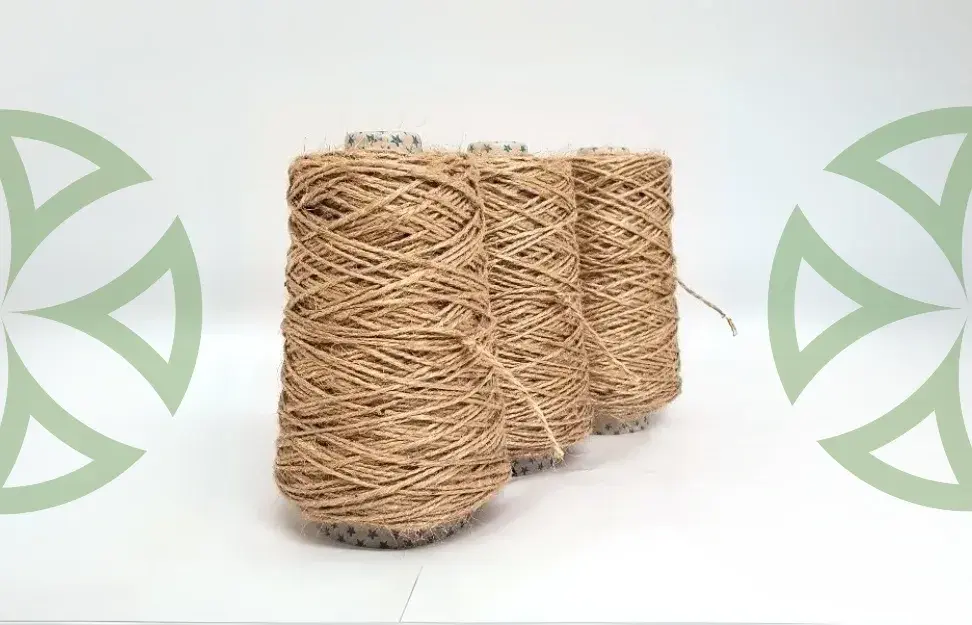
We group our range by end use, because a carpet backing mill, a rope factory, and a garden twine importer are buying three different products even when the fiber is the same. Yarn is sold by count and grade for weaving and industrial conversion. Twine is sold by diameter and tensile strength as a finished tying product. Pick your category below.
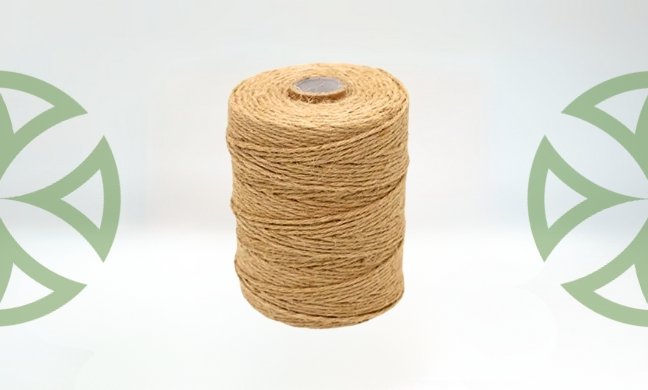
Soft-twisted decorative twine for craft, gift wrapping, macrame, retail packaging, and garden use. Private-label put-ups available: balls, spools, and header-card packing with your brand for retail shelf placement.
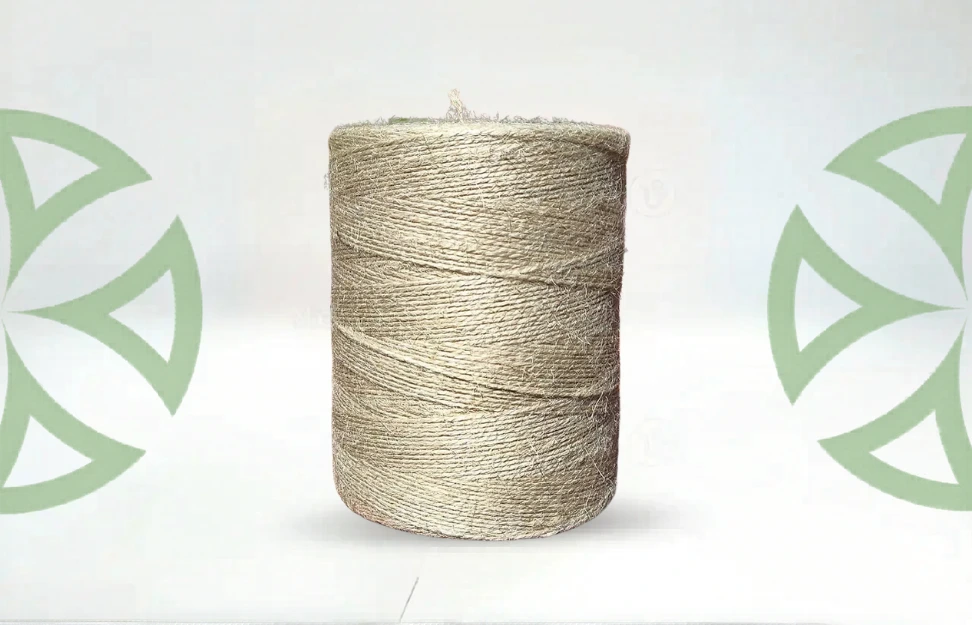
Twisted finished twine for tying, baling, bundling, and agricultural support. Sold by diameter and ply rather than spinning count, in coil, ball, or spool put-ups ready for resale or direct industrial use.
Heavy multi-ply yarn supplied as raw material to rope and cordage manufacturers for twisting into jute rope, ship rope, and industrial cord. Specified by count, ply, and residual oil content to match the buyer’s rope-laying machinery.
Yarn buyers compare suppliers on count accuracy, grade, oil content, and packing format, so we publish our working ranges below. Tex equivalents are included because carpet and textile buyers in Europe specify in Tex while the jute trade quotes in lbs per spyndle. Both systems are accepted on order sheets.
| Specification Area | Available Options |
|---|---|
| Material | 100% natural Bangladeshi jute (Tossa, White, and blends) |
| Product Type | Hessian yarn, sacking yarn, CBC yarn, rope yarn, twine, craft twine |
| Count Range | 7 lbs to 48 lbs per spyndle (approx. 241 to 1,654 Tex) |
| Ply | Single (1-ply) to 6-ply |
| Twist | S or Z, standard or buyer-specified TPM |
| Quality Grades | Hessian quality, sacking quality, CBC quality; CB and cutting blends for coarse counts |
| Oil Content | Approx. 2% to 5% by grade; JBO-free / ROL batching on request |
| Moisture | Within standard jute trade regain limits, lot-tested |
| Strength Testing | Breaking load and quality ratio tested per lot, report on request |
| Color | Natural golden-brown; bleached and dyed on request |
| Winding | Precision wound cone (approx. 2 to 5 kg net), spool, hank, ball |
| Packing | Truss, bale, carton, shrink-wrapped pallet, buyer-specific |
| Container Loading | Approx. 11 to 14 MT per 20ft FCL palletized; higher in loose bale |
| MOQ | One 20ft FCL; mixed counts possible within one container |
| HS Code | 5307.10 (single jute yarn), 5307.20 (multiple or cabled) |
| Shipment Terms | FOB Bangladesh; CFR and CIF on request |
| Lead Time | Typically 20 to 35 days after specification or sample approval |
| Buyer Type | Textile mills, carpet producers, rope factories, importers, wholesalers |
Jute yarn feeds six distinct downstream industries, and each one buys against a different specification logic. The notes below explain what each buyer group actually checks on arrival, which is also a guide to what you should fix in your own purchase specification.
Hessian mills weave our finer counts into burlap cloth for packaging, upholstery, agriculture, and decor fabric. Their acceptance checks are count accuracy and yarn evenness, because uneven yarn creates barré and weak picks in the cloth. We control both at spinning, so the fabric defect rate stays predictable at the loom.
Bag and sacking weavers buy our coarse counts for gunny bags, grain sacks, coffee sacks, and B-Twill fabric. Here the critical number is breaking load, since the woven sack must survive 100 kg filling, hook handling, and stacking. Lot-wise strength reports travel with the shipment so the weaver can match yarn lots to fabric orders.
Carpet mills use jute for primary and secondary backing because the fiber gives dimensional stability that synthetic backing struggles to match at the same cost. CBC buyers in Europe routinely require JBO-free yarn to avoid oil staining and odor complaints in finished carpets. We batch with ROL alternatives on request and document it on the lot certificate.
Rope factories convert our heavy multi-ply rope yarn into jute rope, cord, garden string, and industrial binding. Twine importers buy finished product directly in coil, ball, or spool put-ups. For both groups the controlling specs are diameter tolerance and tensile strength, both stated on our specification sheet per size.
Growers and nurseries use jute twine for plant tying, trellising, and bale tying because it holds knots well and biodegrades in the field after harvest, leaving no plastic residue. Geotextile producers use jute yarn in woven soil-saver fabrics for erosion control on slopes, where the fiber’s moisture retention helps vegetation establish.
Craft brands and retail importers buy our craft twine for macrame, gift wrapping, home decor, and rustic packaging lines. This segment buys put-up and presentation as much as fiber: ball weight, label design, barcode, and carton count all sit in the order specification alongside diameter and color.
Jute yarn is a commodity until the third shipment, when count drift, oil odor, or crushed cones start costing the buyer production time. Our process is organized to prevent exactly those three failures, which is why mills and importers stay with us after the first container.
Count and twist are checked during spinning and again at winding, against tolerances agreed before production. A carpet mill creeling our cones should never discover mid-run that the count drifted two pounds. Lot-wise test data is retained, so any reorder runs against the same verified file.
Standard jute batching oil leaves an odor that some end uses cannot accept. For carpet, decor, and retail craft buyers we batch with rice bran oil based ROL alternatives and certify the lot as JBO-free. State the requirement at quotation stage and it is built into the production plan.
Crushed or telescoped cones waste yarn and stop winding machines. We precision-wind to your cone weight, pack in cartons or shrink-wrapped pallets, and load containers to keep bottom-tier packing intact. Packing photos are shared before container sealing so you see the loading condition, not just the invoice.
From 7 lbs hessian yarn to 48 lbs sacking yarn, plus finished twine and craft put-ups, buyers consolidate multiple requirements into one container and one supplier relationship. Mixed-count containers are standard practice for our wholesale and distributor customers.
We are the producer, not a trading intermediary, so quotations reflect raw jute market movement and actual conversion cost. During the July to September harvest season, when raw jute prices shift, our buyers get repriced quotations from the source rather than a trader's padded hedge.
Commercial invoice, packing list, certificate of origin, and lot test reports come standard. Phytosanitary and fumigation certificates are arranged where the destination requires them, and third-party pre-shipment inspection (SGS, Bureau Veritas, or buyer-nominated) is coordinated on request. Clean paperwork keeps your container out of customs holds.
A complete yarn specification has six data points: count, ply, grade, oil requirement, winding, and quantity. Send whatever you have, even a sample of your current yarn, and we will return a full specification sheet and quotation within 24 hours.
01

Send count (lbs or Tex), ply, end use, monthly or one-time quantity, winding preference, oil content requirement, and destination port. A yarn sample also works.
02
Our production team confirms the right grade and construction for your end use, flags anything that will not perform, and locks tolerances before quoting.
03
You get FOB pricing per ton, packing details, container loading weight, lead time, and payment terms in writing, normally within one working day.
04
A pre-production sample cone or twine put-up is couriered for your testing. Confirm count, twist, strength, and odor before bulk production starts.
05
Production runs against the approved sample with lot-wise testing. Goods are palletized, inspected if required, container loaded, and full documents sent before vessel departure.
The minimum order quantity for jute yarn is one 20ft FCL, which usually carries 11 to 14 metric tons of palletized yarn depending on yarn count, winding, and packing format. Loose bale packing can load more weight. Mixed counts or related products, such as sacking yarn and craft twine, can also be combined in one container.
We supply jute yarn from 7 lbs to 48 lbs per spyndle, equal to approximately 241 to 1,654 Tex. Finer counts are used for hessian and CBC weaving, mid counts for twine and specialty fabrics, and coarse counts for sacking and rope production. Tex or Nm specifications can be converted before order confirmation.
The price of jute yarn per ton from Bangladesh depends on yarn count, grade, ply, batching oil, winding format, packing, and order volume. Prices also change with the seasonal raw jute market, especially around the July to September harvest. Finer hessian and CBC yarn usually cost more than coarse sacking yarn because they require better fiber.
Yes, JBO-free jute yarn is available on request. Standard jute yarn uses conventional batching oil, which may have a noticeable odor. For carpet backing, home decor, craft, and odor-sensitive products, we produce JBO-free yarn using ROL, a rice bran oil-based batching system. The requirement is documented on the lot certificate.
Jute yarn is a mill-spun raw material used for weaving, knitting, tufting, and industrial conversion. It is usually sold by count, grade, and ply. Jute twine is a finished twisted product sold by diameter, ply, and tensile strength. Yarn is used for production, while twine is used for tying, bundling, gardening, packaging, and resale.
Jute yarn is usually packed on precision-wound cones of about 2 to 5 kg net weight, then packed in cartons or shrink-wrapped pallets. Coarse sacking yarn can also be shipped in truss or bale form. Jute twine is packed in coils, balls, or spools. Carton marking, pallet layout, and shipping marks follow the buyer’s purchase order.
Single jute yarn is usually classified under HS code 5307.10, while multiple or cabled jute yarn falls under HS code 5307.20. Finished jute twine, cordage, or rope may fall under heading 5607 in some markets. Buyers should confirm the final import classification with their customs broker before shipment.
Jute yarn production usually takes 20 to 35 days after sample or specification approval, depending on yarn count, order quantity, packing format, and mill load. Sea freight from Bangladesh adds extra port-to-port transit time based on the destination. Repeat orders are usually faster because the specification and sampling process are already approved.
Send your count, ply, grade, quantity, and destination port. Our export team replies within 24 hours with firm FOB pricing per ton, packing configuration, container loading weight, and lead time.
+8801711621464
export@juteforgood.com
Within 24 hours