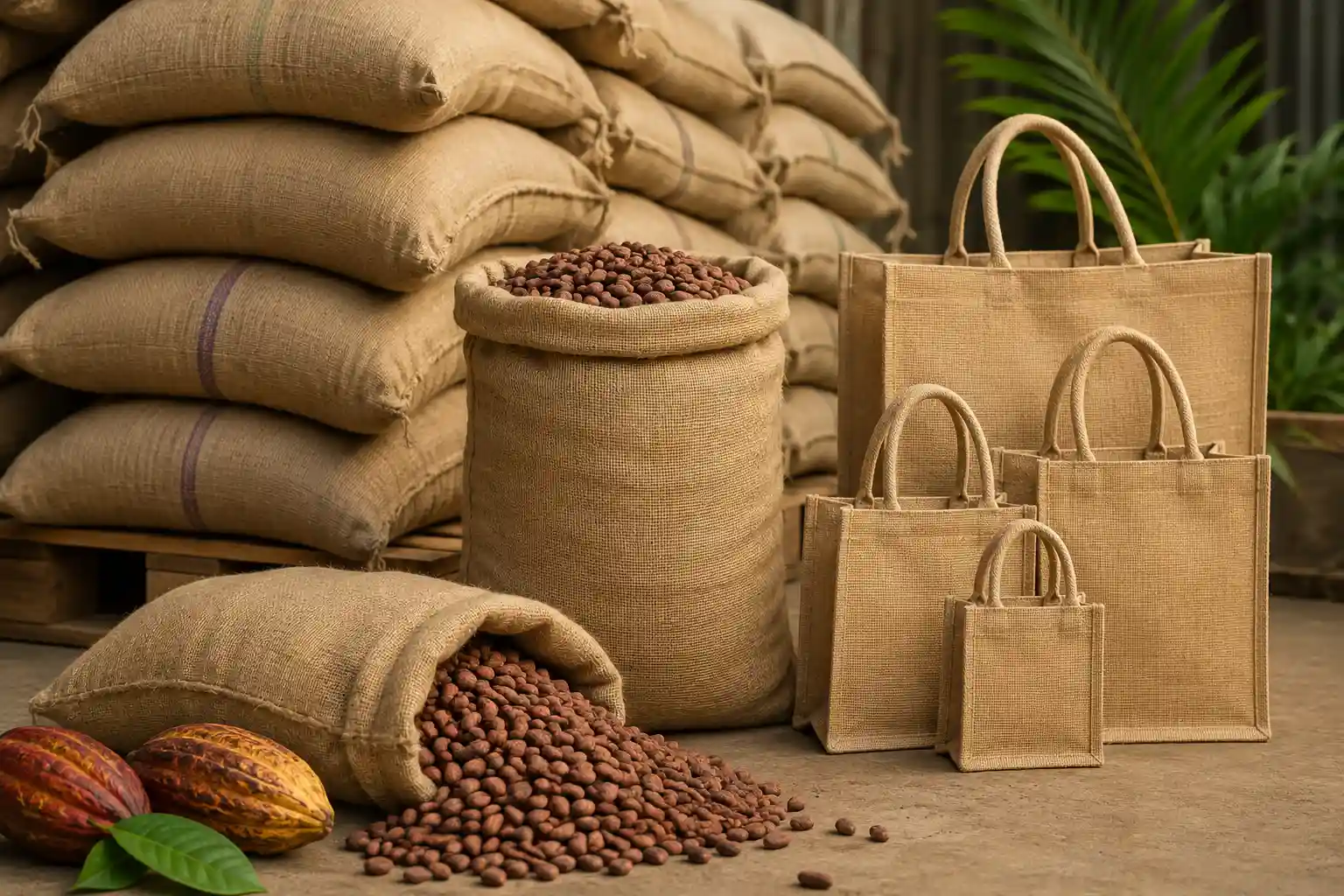

Hessian cloth is a coarse woven fabric made mainly from natural jute fiber. The same material is commonly called burlap fabric in the United States and Canada. Manufacturers supply it in different fabric weights, widths, weave densities, treatments, colors, and packing formats for agricultural, industrial, retail, gardening, and decorative applications.
International buyers should not select hessian based only on appearance or a general weight description. GSM, ounce specification, width, porter and shots, selvedge, moisture, treatment, roll length, and end use determine whether the fabric is suitable for a particular order.
This guide explains what hessian is made from, how it differs from sacking and other fabrics, how commercial specifications work, which grades suit different uses, what affects the price, and how B2B buyers can order hessian cloth in bulk.
What Is Hessian Cloth?
Hessian cloth is a lightweight to medium-weight plain-woven jute fabric used for wrapping, sacks, agricultural applications, gardening, retail packaging, upholstery, crafts, and temporary surface protection. It is normally lighter and finer than heavy jute sacking, although buyers may request different yarn counts, fabric weights, widths, and finishes.
The fabric has a visible woven structure and a naturally coarse surface. Its construction allows air to move through the material, although the degree of breathability depends on the weave density and any coating or lamination.
Hessian can be supplied as:
- Natural untreated fabric
- Vegetable oil-treated fabric
- Hydrocarbon-Free fabric
- Dyed or printed fabric
- Softened or calendared fabric
- Laminated fabric
- Cut sheets or ribbons
- Fabricated bags and covers
- Rolls or hydraulically pressed bales
The final product should always be defined through an approved specification rather than the word “hessian” alone.
Are Hessian and Burlap the Same Fabric?
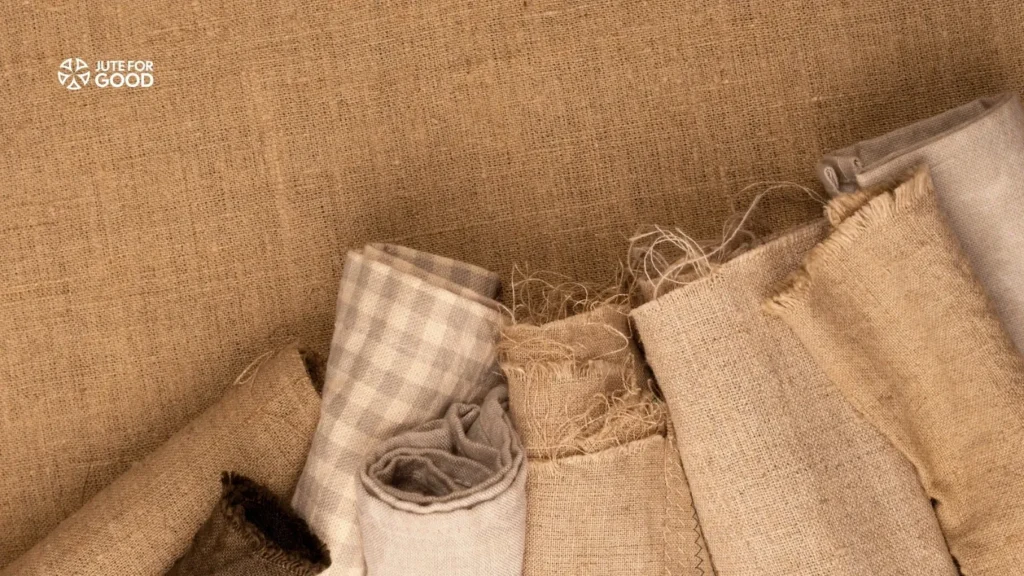
Hessian and burlap usually describe the same category of coarse woven jute fabric. “Hessian” is common in the United Kingdom, Australia, Bangladesh, India, and many export markets. “Burlap” is the more common term in the United States and Canada.
The regional term does not determine the fabric quality. A buyer requesting burlap may need the same material as a buyer requesting hessian, but both should still define the required width, fabric weight, weave, treatment, color, and packing.
The main distinction is therefore linguistic rather than technical:
| Market or context | Common term |
| United Kingdom | Hessian |
| Australia and New Zealand | Hessian |
| Bangladesh and India | Hessian |
| United States | Burlap |
| Canada | Burlap |
| International jute trade | Hessian or jute hessian cloth |
| Caribbean markets | Crocus may also be used |
Buyers should use both terms in enquiries when regional terminology could cause confusion.
What Is Hessian Made From?
Hessian is made primarily from jute fibers extracted from the stems of Corchorus olitorius and Corchorus capsularis. Jute is a natural bast fiber, meaning the usable fibers develop in the outer stem beneath the plant’s bark. The fibers are separated, processed, spun into yarn, and woven into cloth.
The Food and Agriculture Organization identifies jute as a strong natural fiber obtained from these two Corchorus species. Jute has long been used to manufacture sacks, wrapping materials, cordage, carpets, and other woven products.
Most standard hessian is made from 100% jute. Some decorative or performance fabrics may include:
- Cotton yarn
- Synthetic sewing thread
- Lamination
- Polymer coatings
- Pigment printing
- Chemical finishes
- Blended fibers
These additions can change the fabric’s strength, surface, moisture resistance, recyclability, and biodegradability. Buyers requiring an all-natural product should confirm the fiber composition, sewing material, printing system, and treatment.
How Is Hessian Fabric Manufactured?
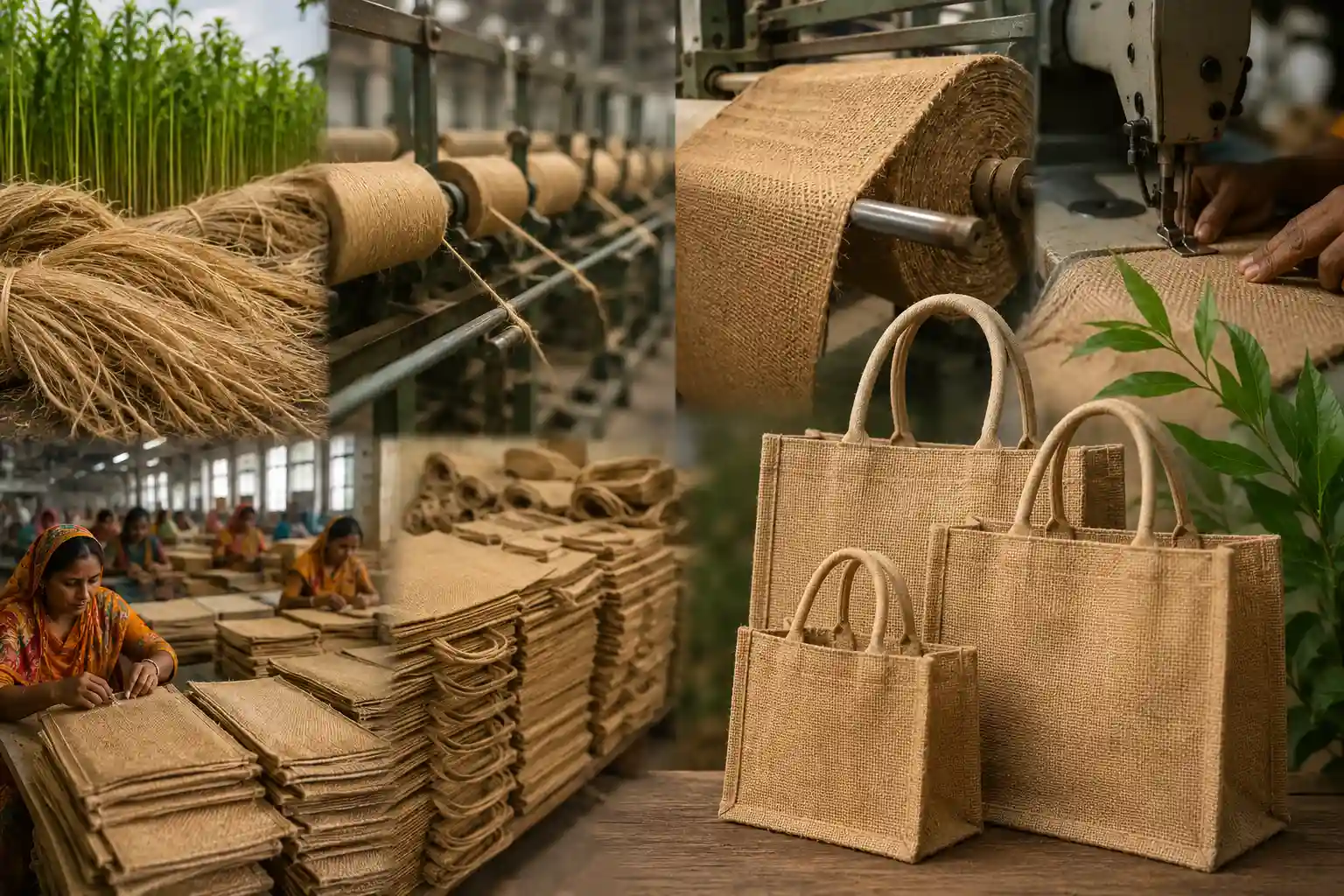
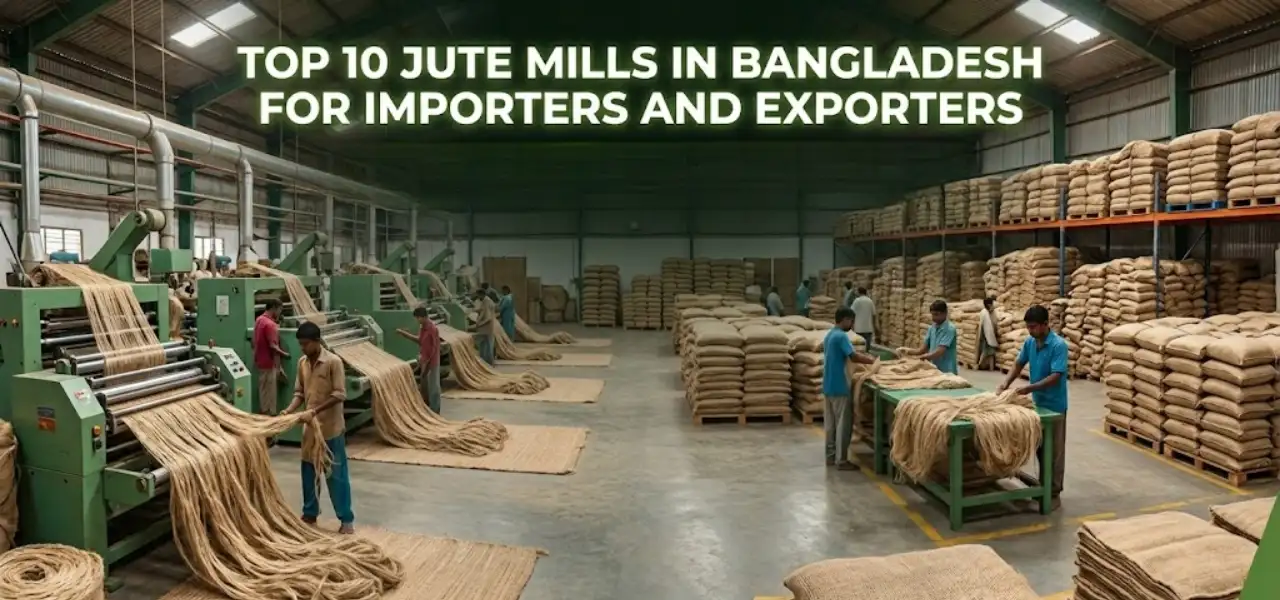
Hessian manufacturing converts raw jute fiber into yarn and then into woven fabric. The process normally includes fiber grading, batching, carding, drawing, spinning, weaving, finishing, inspection, and packing. Each stage can affect the fabric’s weight, consistency, appearance, odor, and performance.
Jute Fiber Selection and Grading
Manufacturers first select jute fiber according to color, strength, fineness, root content, defects, and intended product use.
Finer and cleaner fibers may be selected for decorative or tightly woven fabric. Coarser fibers may suit general wrapping, construction, or agricultural applications.
Raw-fiber selection influences:
- Yarn consistency
- Fabric color
- Surface appearance
- Weave regularity
- Tensile performance
- Amount of loose fiber
- Finished product cost
Batching and Softening
Batching prepares the jute fiber for carding and spinning. Mills apply controlled moisture and batching oil to soften the fibers and improve processing.
The batching system must match the final use. Fabric intended for food-contact packaging should not use mineral hydrocarbon-based oils where these may transfer to the packed commodity.
Codex discussions on mineral oil hydrocarbons recommend using jute bags produced with mineral-oil-hydrocarbon-free vegetable oils to reduce food-contamination risk.
Carding, Drawing, and Spinning
Carding opens and aligns the softened fibers. Drawing combines and evens the fiber slivers before the material is spun into jute yarn.
The yarn count, twist, uniformity, and strength affect the final fabric. Uneven yarn can create irregular openings, weight variation, weak points, and visible weaving defects.
Weaving
Hessian is usually produced using a plain weave. Warp yarns run along the fabric length, while weft yarns cross the width.
The manufacturer controls:
- Warp density
- Weft density
- Yarn count
- Fabric width
- Fabric weight
- Loom tension
- Selvedge construction
The combination of yarn and weave creates the required porter-and-shots specification.
Finishing and Packing
After weaving, the cloth may be inspected, cropped, dyed, printed, softened, laminated, cut, or rolled.
Export packing may include:
- Rolls
- Folded fabric
- Cut pieces
- Ribbons
- Hydraulically pressed bales
- Palletized rolls
- Buyer-branded packaging
The buyer should approve the finish and packing configuration before bulk production.
What Are the Main Grades and Finishes of Hessian Fabric?
The main hessian categories are standard natural hessian, fine decorative hessian, food-contact hessian, dyed or printed hessian, and laminated or performance-treated hessian. These categories describe fabric construction, cleanliness, treatment, or finish. Jute geotextiles should be treated as a separate engineered product class.
Standard Natural Hessian
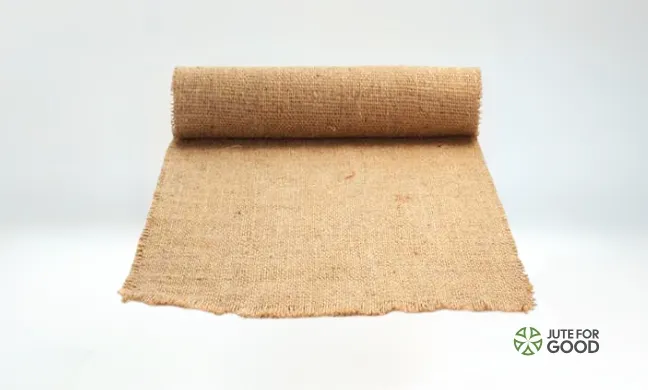
Standard natural hessian is a plain-woven jute fabric used for packaging, wrapping, gardening, sandbags, upholstery, surface protection, and general industrial applications.
The fabric normally has:
- Natural golden-brown color
- Coarse visible texture
- Plain weave
- Real or tucked selvedge
- Moderate breathability
- Untreated or buyer-approved batching treatment
- Roll or bale packing
Common trade descriptions include combinations such as 40-inch, 7 oz fabric with 9 × 8 porter and shots, or 40-inch, 10 oz fabric with 11 × 12 porter and shots. The width must be stated because the ounce measurement refers to a running yard at a specified width.
Standard hessian may suit:
- Light agricultural sacks
- Sandbags
- General wrapping
- Root-ball wrapping
- Concrete curing
- Protective covering
- Upholstery backing
- Fabricated jute products
Fine and Decorative Hessian
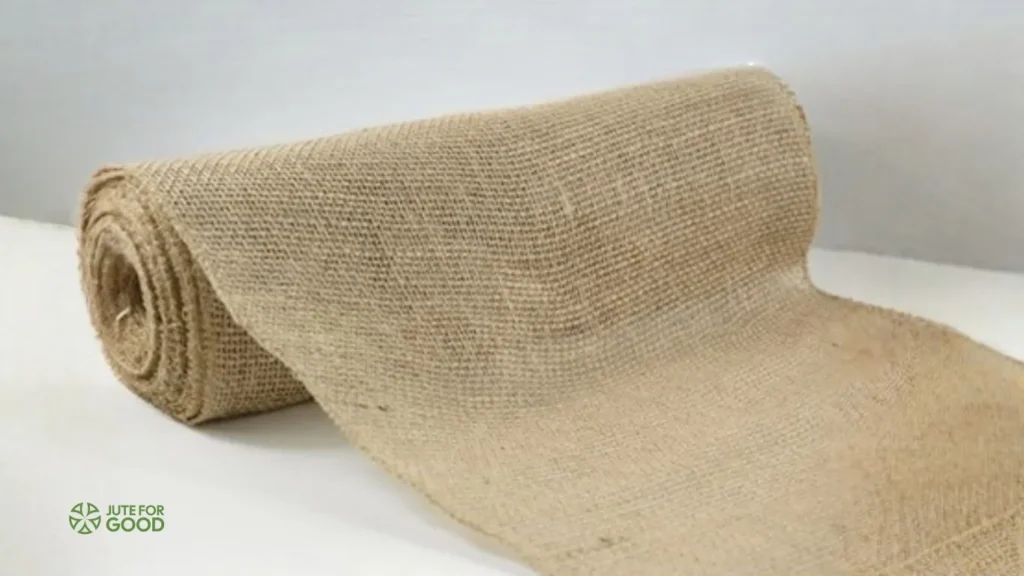
Fine or decorative hessian has a cleaner appearance, finer yarn, or more controlled weave than general industrial cloth. Brands use it for décor, gift packaging, product displays, table runners, ribbons, bags, and craft products.
Available finishes may include:
- Natural color
- Bleached finish
- Dyed color
- Pigment printing
- Logo printing
- Softening
- Calendaring
- Stitched edges
- Cut ribbons
- Retail roll packing
Decorative buyers should approve color, texture, weave opening, dye fastness, print position, edge finish, and roll presentation.
A decorative fabric should not automatically be used for food-contact or outdoor applications. Its suitability depends on the dye, treatment, printing ink, and intended use.
Food-Contact Hessian
Food-contact hessian is produced for dry agricultural commodities such as coffee, cocoa, grains, rice, groundnuts, and selected produce. Suitability depends on the complete production and storage system rather than a general “food-grade” label.
Food-contact buyers should confirm:
- 100% jute composition
- Vegetable oil treatment
- Hydrocarbon-Free requirements
- Clean production
- Controlled odor
- Moisture limit
- Oil-content limit
- Storage condition
- Printing ink requirement
- Supporting test reports
- Destination-market rules
Codex guidance has previously advised that jute bags used for food products should not be treated with mineral hydrocarbon-based oils.
Food-contact suitability is application-specific. Fabric approved for coffee packaging in one market may not automatically satisfy another buyer’s cocoa, grain, or regulatory requirements.
Dyed and Printed Hessian
Dyed and printed hessian is used when the fabric must provide a specific color, design, logo, or brand appearance.
Common options include:
- Solid-color dyeing
- Screen printing
- Pigment printing
- Single-color logos
- Multicolor artwork
- Repeating patterns
- Shipping marks
- Cut and sewn branded products
Buyers should approve a lab dip or color sample where color accuracy matters. A printed sample should confirm artwork size, position, ink coverage, and color before bulk production.
Printing and dyeing can affect the fabric’s end-of-life options. Buyers planning soil-contact, composting, or food-contact use should review the chemical system before approval.
Laminated and Performance-Treated Hessian
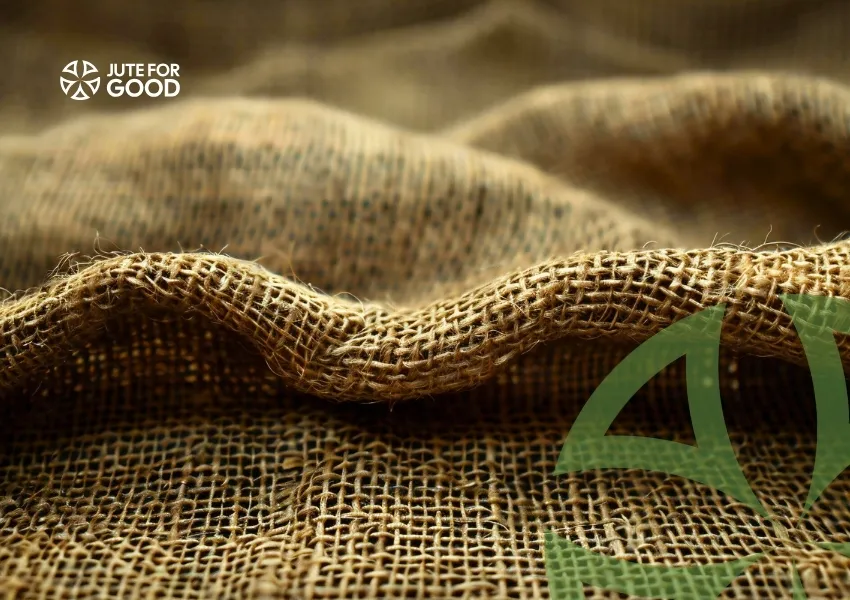
Laminated hessian combines woven jute fabric with an added barrier or coating. Lamination may improve moisture resistance, product retention, surface stability, or printability.
Possible laminations include:
- Polyethylene
- Polypropylene
- BOPP film
- Buyer-specified barrier layers
Other performance treatments may include:
- Water resistance
- Fire retardancy
- UV resistance
- Anti-rot treatment
- Softening
- Stiffening
Performance claims must identify the treatment and testing requirement. A general statement such as “fire-retardant fabric” is incomplete unless the test method, performance level, and certification are defined.
Lamination and synthetic treatments can prevent the complete fabric from biodegrading like untreated natural jute.
Is Hessian the Same as Jute Sacking or Geotextile?
Hessian, jute sacking, and jute geotextile are related jute products, but they are not interchangeable. Hessian is normally a lighter plain-woven cloth. Sacking is a heavier fabric used for industrial sacks. Jute geotextile is engineered according to soil, drainage, erosion, tensile, and permeability requirements.
| Product | Typical construction | Main uses |
| Hessian cloth | Lightweight to medium plain weave | Wrapping, light sacks, gardening, décor, surface protection |
| Jute sacking | Heavy coarse weave | Grain sacks, agricultural sacks, industrial packaging |
| Jute scrim | Open woven structure | Reinforcement, landscaping, temporary soil protection |
| Jute geotextile | Engineered woven or open mesh | Erosion control, drainage, slope protection, soil stabilization |
| Jute geobag | Fabricated heavy bag | Riverbanks, hydraulic works, soil containment |
A jute geotextile specification may include:
- GSM
- Tensile strength
- Elongation
- Aperture or mesh opening
- Water permeability
- Roll width
- Roll length
- Required service period
- Project-specific installation rules
Project engineers should define these values. Buyers should not select an engineered geotextile using only a general hessian GSM range.
Which Hessian Specification Should a Buyer Choose?
A buyer should select hessian by intended use, fabric weight, width, weave density, selvedge, treatment, color, roll length, and packing. The most suitable fabric is not always the heaviest option. A heavier cloth may increase cost without improving performance for a lightweight application.
Key Specification Table
| Specification | What it means | Why it matters |
| Material | Fiber composition | Confirms whether the cloth is 100% jute or blended |
| Width | Finished fabric width | Affects cutting efficiency and total usable area |
| GSM | Grams per square meter | Allows weight comparison independent of width |
| Oz specification | Ounces per running yard at a stated width | Common commercial hessian measurement |
| Porter and shots | Warp and weft density | Affects openings, retention, appearance, and strength |
| Yarn count | Thickness of warp and weft yarn | Influences fabric construction and weight |
| Selvedge | Finished woven edge | Reduces edge fraying and supports fabrication |
| Treatment | Oil, coating, dye, or performance finish | Determines suitability for food, outdoor, or industrial use |
| Moisture | Water present in the fabric | Affects storage, weight, odor, and mold risk |
| Color | Natural, bleached, or dyed | Important for branding and appearance |
| Roll length | Fabric length per roll | Supports cutting, storage, and production planning |
| Packing | Roll, bale, sheet, or pallet | Affects handling and freight |
| Tolerance | Permitted variation | Prevents quality disputes |
How Is Hessian Weight Measured?
Hessian weight is commonly stated in GSM or as ounces per running yard at a defined fabric width. An ounce value without the corresponding width is incomplete.
For example:
| Trade specification | Approximate GSM |
| 40 in, 7 oz per running yard | 214 GSM |
| 40 in, 10 oz per running yard | 305 GSM |
| 45 in, 9 oz per running yard | 244 GSM |
| 45 in, 11 oz per running yard | 298 GSM |
These are mathematical conversions. Actual product tolerance must still be agreed with the manufacturer.
Buyers should not assume that “10 oz hessian” always means the same fabric. The width, porter and shots, yarn count, and measurement method must also match.
What Are Porter and Shots?
Porter and shots describe the thread density of woven jute fabric. Porter generally refers to warp threads, while shots refer to weft threads within the stated measurement area.
A specification such as 9 × 8 per 10 cm represents a more open construction than 11 × 12 per 10 cm, assuming comparable yarns.
Thread density affects:
- Fabric openings
- Surface appearance
- Product retention
- Breathability
- Weight
- Strength
- Printing quality
A tighter weave is not automatically better. Coffee, décor, wrapping, and industrial applications may require different balances.
Which Selvedge Should Buyers Choose?
Selvedge is the finished woven edge running along the fabric length. It helps control fraying and supports cutting or fabrication.
Common options include:
- Real selvedge
- Tucked selvedge
- Raw cut edge
- Stitched edge
- Hemmed edge
Roll fabric for industrial conversion commonly uses real or tucked selvedges. Decorative ribbons or cut pieces may require stitched or specially finished edges.
What Roll Length and Packing Format Are Available?
Hessian may be supplied in rolls, bales, folded cuts, ribbons, or custom sheets. Common commercial packing varies by fabric weight, width, production setup, and buyer requirements.
The order specification should define:
- Yards or meters per roll
- Rolls per pallet
- Yards or meters per bale
- Net weight
- Gross weight
- Bale dimensions
- Wrapping method
- Iron binding where used
- Shipping marks
- Container loading plan
A buyer should confirm usable length rather than relying only on bale weight.
What Is Hessian Fabric Used For?
Hessian fabric is used for dry agricultural packaging, industrial wrapping, gardening, root-ball protection, concrete curing, retail packaging, décor, crafts, and temporary erosion-control applications. The correct fabric depends on load, moisture exposure, required service life, weave opening, treatment, and whether the product will contact food or soil.
Agricultural and Food Packaging
Hessian allows airflow through its woven structure, making it useful for selected dry commodities. Packaging performance still depends on commodity moisture, storage humidity, liner use, journey duration, and handling.
Common applications include:
- Coffee sacks
- Cocoa sacks
- Grain bags
- Rice bags
- Potato bags
- Groundnut bags
- Cashew bags
- Produce wrapping
Food-contact applications should use new, clean fabric produced with the approved treatment and stored away from chemicals, fuel, pests, moisture, and strong odors.
Industrial Wrapping and Construction
Industrial users select hessian for temporary wrapping, surface protection, absorbent covering, and concrete curing.
Applications include:
- Concrete curing
- Machinery wrapping
- Pipe wrapping
- Surface protection
- Temporary site covering
- Bale wrapping
- Sandbags
- Protective layers
Wet hessian may be used to help retain surface moisture during concrete curing. The fabric must remain adequately wet and be applied according to the project’s curing method.
Hessian should not be presented as a universal bag for cement or fine powders. Such materials may require tighter product retention and moisture barriers.
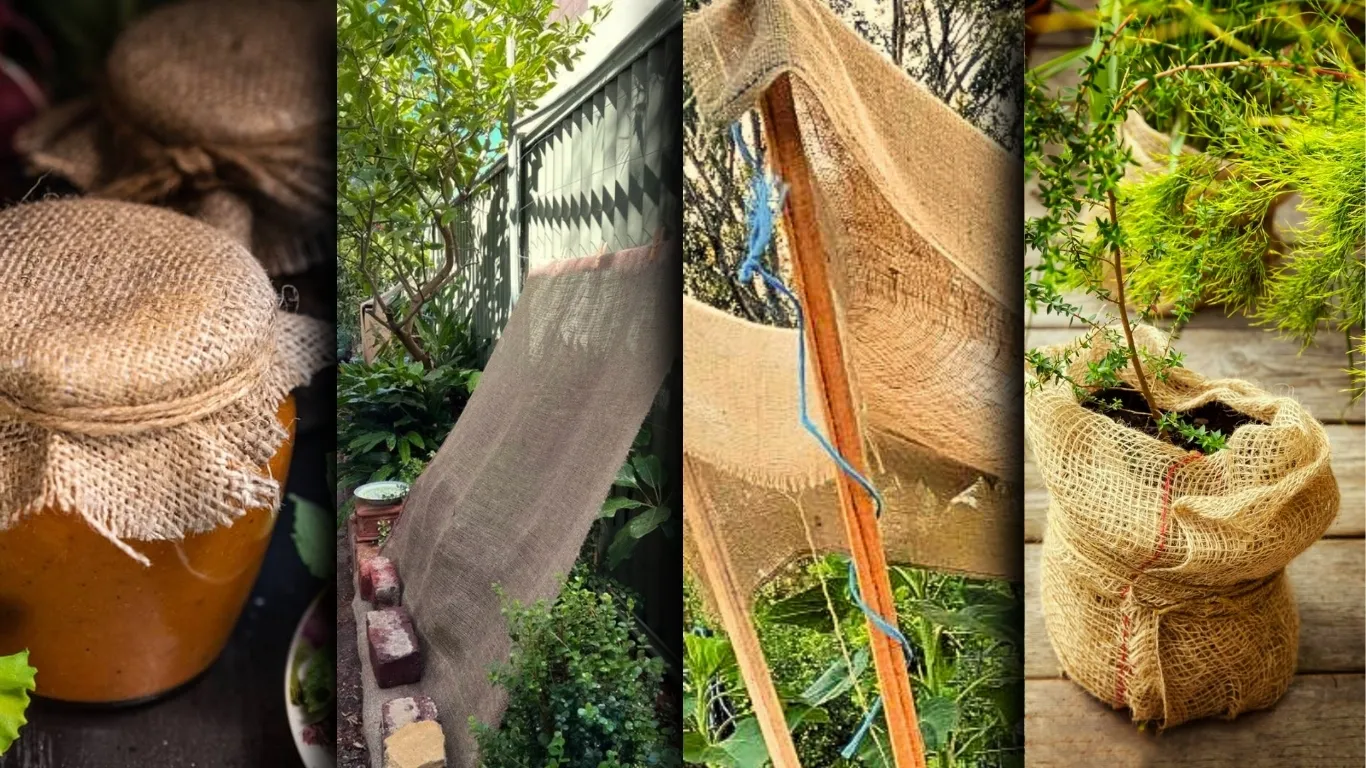
Agriculture and Gardening
Nurseries, landscapers, and growers use hessian because it is flexible, breathable, and available in biodegradable untreated forms.
Applications include:
- Root-ball wrapping
- Nursery covers
- Frost protection
- Wind protection
- Temporary shade
- Seed covering
- Mulch retention
- Tree-trunk protection
- Soil-contact wrapping
Untreated natural hessian can deteriorate under biological and environmental exposure. That may benefit temporary landscaping applications but makes it unsuitable where long-term strength is required.
Décor, Retail Packaging, and Crafts
Decorative hessian provides a visible natural texture for brands, event planners, and craft businesses.
Common products include:
- Table runners
- Gift wraps
- Ribbons
- Candle covers
- Plant-pot covers
- Drawstring pouches
- Tote bags
- Retail display fabric
- Wall coverings
- Cushion covers
- Wedding decorations
Decorative buyers should consider loose fibers, fraying, color variation, odor, and surface roughness before using hessian near delicate products or clothing.
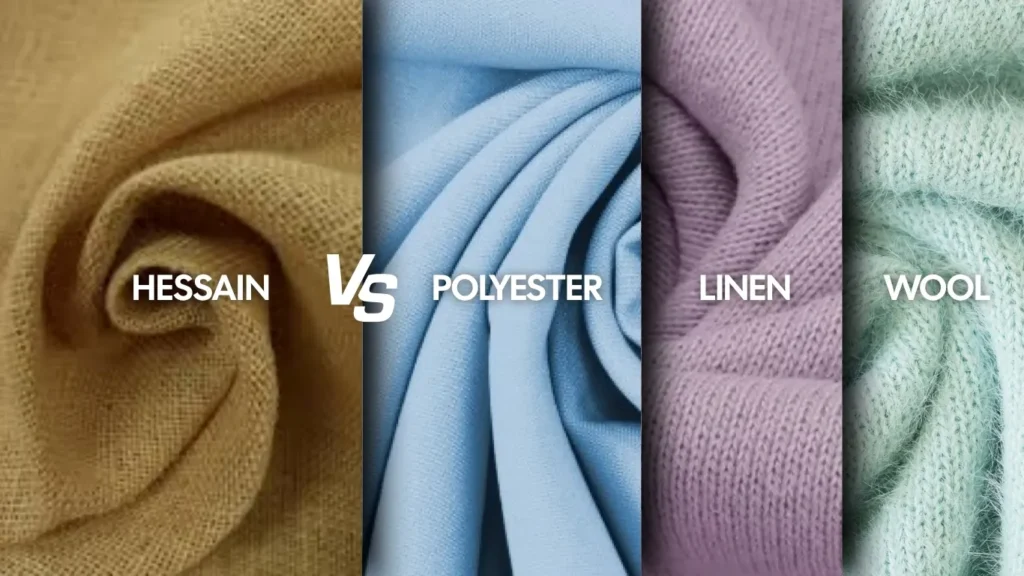
Temporary Erosion and Soil Protection
Open jute fabrics and scrims may support temporary soil protection, seed establishment, landscaping, and erosion control.
Untreated jute can lose strength as it biodegrades. The required service period must match vegetation growth and site conditions.
Engineered slopes, riverbanks, roads, and hydraulic works require a defined jute geotextile specification rather than ordinary decorative or packaging hessian.
What Are the Advantages and Limitations of Hessian?
Hessian provides natural-fiber content, breathability, surface friction, printability, and multiple fabrication options. Its limitations include moisture absorption, fiber shedding, rough texture, inconsistent natural color, low barrier performance, and reduced durability during prolonged outdoor exposure.
Main Advantages
- Made mainly from renewable jute fiber
- Available in multiple weights and widths
- Suitable for printing and dyeing
- Breathable when uncoated
- Provides friction for stacking and handling
- Can be cut and sewn into multiple products
- Biodegradable when untreated and free from synthetic components
- Available in rolls, bales, sheets, or fabricated items
Main Limitations
- Absorbs moisture from the surrounding environment
- Can develop mold or odor under poor storage
- Provides little moisture barrier without coating
- May shed loose fibers
- Has a coarse surface
- Natural color may vary between batches
- Frays at unfinished edges
- Loses strength during extended soil or weather exposure
- Lamination reduces end-of-life biodegradability
- May not retain powders or small particles without a liner
Buyers should assess application performance before selecting hessian only for its natural appearance.
How Does Hessian Compare With Sacking, Canvas, and Woven PP?
Hessian is lighter and more breathable than heavy jute sacking. Cotton canvas offers a smoother, tighter fabric for covers and finished goods. Woven polypropylene provides stronger moisture resistance and dimensional consistency but is synthetic and does not biodegrade like untreated natural jute.
| Attribute | Hessian | Jute sacking | Cotton canvas | Woven PP |
| Main material | Jute | Jute | Cotton | Polypropylene |
| Construction | Light to medium plain weave | Heavy coarse weave | Tight woven fabric | Woven synthetic tapes |
| Breathability | High when uncoated | Moderate to high | Moderate | Depends on coating |
| Moisture barrier | Low | Low without liner | Low without treatment | Higher when laminated |
| Surface | Coarse | Very coarse | Smoother | Smooth or woven texture |
| Typical uses | Wrapping, gardening, light bags, décor | Heavy commodity sacks | Covers, bags, upholstery | Grain, fertilizer, industrial bags |
| Biodegradability | Yes when untreated and all-natural | Yes when untreated and all-natural | Yes when untreated and all-natural | No |
| Main buyer checks | Weight, width, weave, finish | Bag weight, weave, seams | Weight, finish, strength | Denier, coating, UV treatment |
The correct comparison depends on the product being packed and the required service life. No material is the best choice for every application.
What Affects the Price of Hessian Fabric?
Hessian fabric prices depend on raw jute quality, yarn count, fabric weight, width, weave density, treatment, color, printing, roll length, packing, quantity, inspection, and Incoterm. Buyers should compare quotations using one written specification because a lower price may represent a lighter or more open fabric.
Main Price Factors
| Price factor | Effect on cost |
| Raw jute grade | Cleaner or finer fiber may cost more |
| Fabric weight | Heavier fabric uses more yarn |
| Width | Wider fabric changes material use and loom setup |
| Porter and shots | Tighter construction requires more yarn |
| Treatment | Vegetable oil, lamination, and special finishes affect cost |
| Dyeing | Custom colors require processing and approval |
| Printing | More colors and larger artwork increase setup |
| Roll length | Special roll sizes may require additional handling |
| Packing | Pallets, wrapping, and compressed bales affect cost |
| Quantity | Larger production runs may improve unit economics |
| Testing | Laboratory or third-party tests add cost |
| Incoterm | EXW, FOB, CFR, and CIF include different services |
A complete request for quotation should state the destination port and preferred Incoterm. FOB pricing should not be compared directly with a CIF price.
How Should B2B Buyers Order Hessian Cloth in Bulk?
B2B buyers should define the application, approve a specification, review a sample, confirm testing, agree on packing, inspect production, and verify shipping documents. A structured purchasing process reduces disputes involving weight, width, weave density, treatment, color, roll length, and usable quantity.
Step 1: Define the Application
The supplier needs to know whether the fabric will be used for:
- Food packaging
- Industrial wrapping
- Concrete curing
- Gardening
- Décor
- Printing
- Bag production
- Lamination
- Soil protection
The application determines the required construction and treatment.
Step 2: Prepare the Specification
The enquiry should include:
- Material composition
- GSM or ounce specification
- Fabric width
- Porter and shots
- Yarn requirement
- Selvedge
- Treatment
- Color
- Printing
- Roll length
- Total quantity
- Packing format
- Destination port
- Incoterm
Buyers should also define tolerances for weight, width, length, and color where required.
Step 3: Approve a Sample
A physical sample should be checked for:
- Weight
- Width
- Weave
- Texture
- Openings
- Color
- Odor
- Treatment
- Printing
- Edge finish
- Fabrication performance
The approved sample should become the production reference.
Step 4: Confirm Testing and Inspection
Testing may include:
- GSM
- Width
- Roll length
- Moisture
- Oil content
- Hydrocarbon testing
- Tensile strength
- Tear strength
- Color fastness
- Fire-retardant performance
- Water resistance
Only tests relevant to the buyer’s application should be included.
Inspection can occur during production and before shipment. An independent pre-shipment inspection may be arranged through an agreed inspection company.
Step 5: Confirm Export Packing
The packing list should identify:
- Rolls or bales
- Length per unit
- Net weight
- Gross weight
- Number of packages
- Total yardage or meterage
- Bale or roll dimensions
- Shipping marks
- Container quantity
The buyer should verify whether the fabric is floor-loaded or palletized.
Step 6: Review Shipping Documents
The document set may include:
- Commercial invoice
- Packing list
- Bill of Lading
- Certificate of Origin
- Inspection certificate
- Treatment declaration
- Test report
- Insurance document where applicable
Document requirements should be agreed before shipment.
How Should Hessian Rolls and Bales Be Stored?
Hessian should be stored in a dry, ventilated, clean warehouse away from direct floor contact, rain, chemicals, fuel, pests, and strong odors. Jute absorbs moisture from the surrounding air, so poor storage can cause weight changes, mold, staining, odor, and loss of fiber strength.
Storage controls should include:
- Raised pallets or dry platforms
- Space between fabric and walls
- Roof and water-leak inspection
- Ventilation
- Pest control
- Separation from chemicals
- Separation from food contaminants
- Protection from direct sunlight
- Clear batch identification
- First-in, first-out stock control
Wet or contaminated fabric should not be packed into a container. Container floors, walls, roof, doors, and odor should be checked before loading.
Why Source Hessian Cloth from Jute For Good?
Jute For Good manufactures and exports hessian cloth from Bangladesh for importers, packaging companies, converters, agricultural businesses, retailers, and industrial buyers. Orders can be developed against buyer-approved fabric weight, width, weave density, treatment, color, printing, roll length, and export packing.
Available Product Options
Jute For Good supplies:
- Natural hessian cloth
- Burlap fabric rolls
- Food-contact hessian
- Hydrocarbon-Free hessian
- Dyed hessian
- Printed hessian
- Laminated hessian
- Decorative jute fabric
- Cut hessian sheets
- Fabricated hessian bags
- Jute sacking fabric
- Jute geotextile products
Specification-Based Production
Buyers can request:
- Custom GSM
- Oz-based trade specifications
- Custom widths
- Porter-and-shots construction
- Real or tucked selvedge
- Vegetable oil treatment
- Natural or dyed color
- Logo printing
- Roll or bale packing
- Buyer-specific labels
- Pre-shipment inspection
The final specification depends on technical feasibility and order quantity.
Sample and Inspection Support
A pre-production sample helps confirm the fabric before bulk weaving. Jute For Good can also coordinate in-line checks and pre-shipment inspection based on the agreed purchase specification.
Buyers should provide the intended use, complete dimensions, quantity, destination, and required test conditions when requesting a quotation.
Frequently Asked Questions
Are Hessian and Burlap the Same Material?
Yes. Hessian and burlap generally refer to the same coarse woven jute fabric. “Hessian” is common in the UK, Australia, Bangladesh, India, and export trade. “Burlap” is common in the US and Canada. The regional name does not define the fabric weight, weave, treatment, or quality.
What GSM Hessian Fabric Should Buyers Choose?
The required GSM depends on the use, width, yarn, weave, and performance requirement. Lighter hessian suits decoration, wrapping, and light conversion. Medium constructions suit general packaging and gardening. Heavy commodity sacks and geotextiles often require different jute constructions rather than ordinary hessian.
How Is Hessian Weight Measured in Ounces?
The ounce specification normally means ounces per running yard at a stated fabric width. For example, 40-inch, 7 oz hessian means one running yard of 40-inch-wide fabric weighs 7 oz. Buyers must include the width when comparing ounce specifications.
Is Hessian Suitable for Coffee and Cocoa Packaging?
Hessian can be suitable for coffee and cocoa when produced against the buyer’s food-contact specification. Buyers should confirm vegetable oil treatment, Hydrocarbon-Free requirements, moisture, odor, cleanliness, printing ink, and applicable destination-market standards. Ordinary industrial hessian should not automatically be used for food.
Is Untreated Hessian Waterproof?
No. Untreated hessian absorbs moisture and does not provide a waterproof barrier. Lamination or a suitable treatment may improve water resistance, but the required performance should be tested. Moisture-sensitive products may need an internal liner or another packaging system.
Can Hessian Fabric Be Washed?
Hessian can be cleaned carefully for some decorative uses, but washing may cause shrinkage, distortion, fraying, fiber shedding, or color change. Industrial and food-contact fabric should follow the buyer-approved cleaning or handling procedure rather than household washing instructions.
Can Hessian Be Printed, Dyed, or Laminated?
Yes. Hessian can be dyed, pigment printed, screen printed, softened, calendared, or laminated. Buyers should approve the color, print, treatment, and test requirements before production. Added coatings and synthetic materials may change breathability and biodegradability.
What Is the Standard Roll Length for Bulk Hessian?
There is no single roll length for every hessian product. Roll length depends on fabric weight, width, buyer requirements, handling limits, and packing method. Buyers should specify the required yards or meters per roll and the permitted length tolerance.
What Should Buyers Inspect Before Shipment?
Buyers should inspect fabric weight, width, roll length, porter and shots, color, selvedge, treatment, moisture, odor, printing, packing, and total quantity. Food-contact and performance-treated orders may require additional laboratory tests or declarations.
Is Laminated Hessian Biodegradable?
The jute base fabric is biodegradable, but synthetic lamination such as PE, PP, or BOPP does not biodegrade like untreated jute. Laminated hessian should not be described as fully biodegradable unless the complete material has been tested and verified under defined conditions.
Conclusion
Hessian cloth and burlap fabric are regional names for a versatile woven jute material used in packaging, agriculture, gardening, construction, décor, and retail products. Buyers should select the fabric through measurable attributes rather than a general product name.
The most important buying factors are GSM or ounce specification, width, porter and shots, yarn construction, selvedge, treatment, moisture, color, roll length, packing, and end use. Food-contact, outdoor, and performance applications require additional testing and documentation.
For a factory-direct quotation, send Jute For Good the intended use, width, fabric weight, weave, treatment, color, printing, quantity, packing format, and destination port.