

Importing jute bags from Bangladesh has become easier, faster, and more profitable for global buyers. This guide explains every step of the import process in simple language. You will learn how to choose the right product, request accurate quotations, confirm samples, handle documentation, and manage port clearance. The goal is to help importers avoid common mistakes, reduce costs, and ensure smooth shipments. Each step is explained clearly with practical insights based on real global trade practices.
How to Import Jute Bags from Bangladesh : Step-by-Step Guide
Importing jute bags from Bangladesh is straightforward when you follow the right process. Here’s a clear, 7-step guide designed for new and experienced importers in Africa, the Middle East, and beyond.
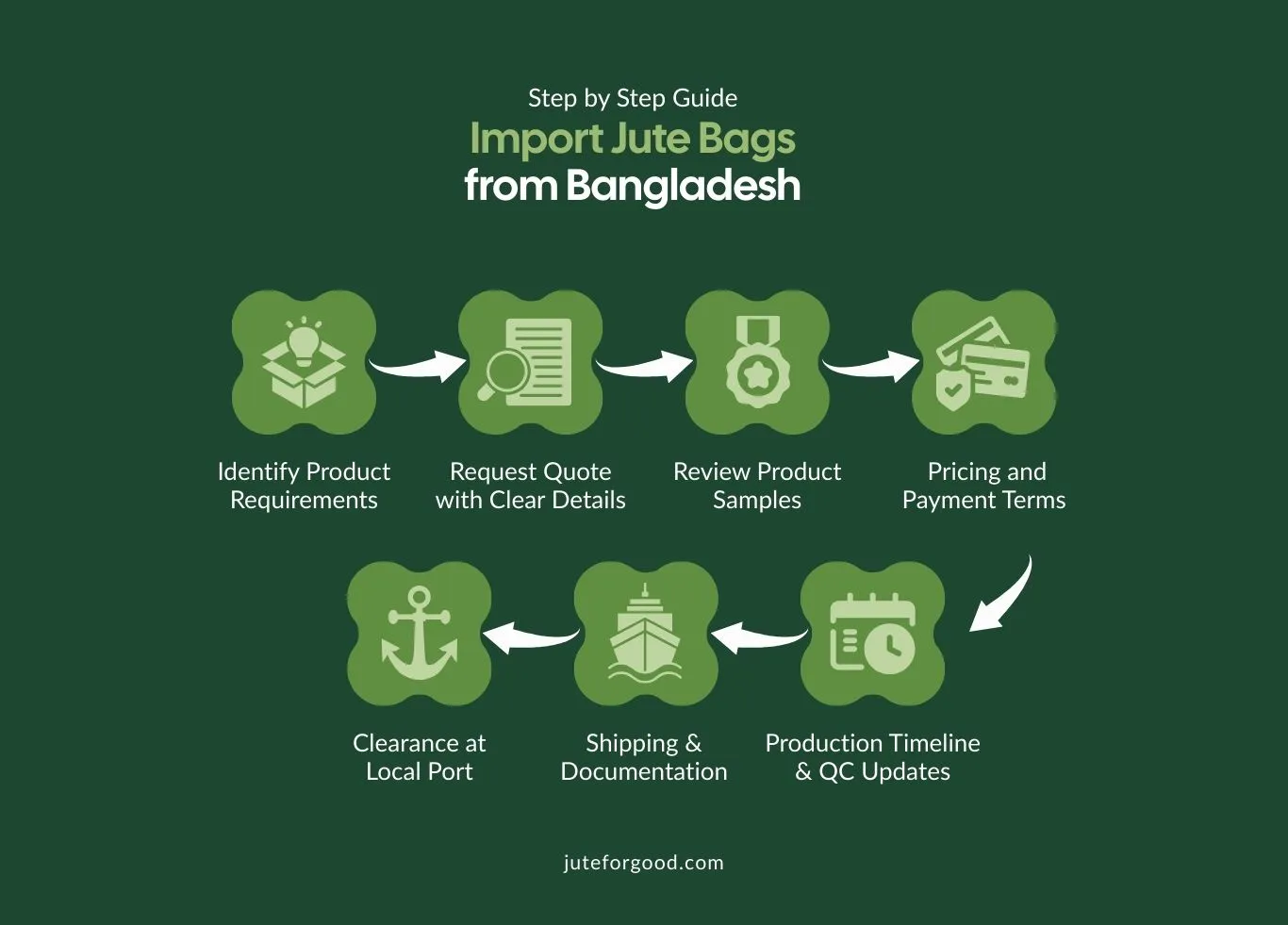
Step 1: Identify Your Product Requirements
Before requesting a price, define exactly what type of jute product you need. Clear requirements help the manufacturer quote accurately and avoid production delays.
Key things to decide:
- Bag size, weight & design:
Choose the dimensions (e.g., 50kg, 90kg, 100kg bags), fabric weight (GSM or Porter & Shot), printing style, or customized design if needed. - Quantity (MOQ):
Most factories offer flexible MOQs depending on the product, usually starting from 5,000–10,000 pieces for bags or 1–2 tons for yarn/rope. - Branding needs:
Logo printing, ink color, artwork placement, or private-label packaging. - Export-ready packaging:
Bale packing, pallet packing, or moisture-protected wrapping for long-distance shipments.
Step 2: Request a Quote with Clear Details
Once your requirements are defined, share complete information with the supplier to receive an accurate price.
Include the following in your quotation request:
- Quantity: Total number of bags or total weight for yarn/rope/fabric.
- Product type: Whether you need jute bags, yarn, rope, hessian cloth, canvas, or sacking.
- Destination port:
Ghana (Tema/Takoradi), Kenya (Mombasa), Nigeria (Lagos/Apapa), Algeria (Algiers/Oran), UAE (Jebel Ali), etc. - Shipping preference:
- FCL (Full Container Load): Best for wholesale buyers.
- LCL (Less than Container Load): For smaller shipments or trial orders.
Proper information helps avoid re-quotation and speeds up shipping arrangements.
Step 3: Review Samples
Before placing a bulk order, always request product samples. This ensures the final product meets your expectations.
Why samples matter
- Confirms the fabric strength, texture, and durability
- Ensures printing and color quality
- Helps verify bag size and stitching quality
- Prevents misunderstanding during final production
What to check in the sample
- Texture and feel: Smoothness, coarseness, or natural jute finish
- Stitch quality: Double-stitch strength, alignment, reinforcement
- Weight consistency: Check GSM or Porter & Shot accuracy
- Overall finish: Clean edges, accurate size, and sturdiness
Step 4: Finalise Pricing & Payment Terms
After approving the sample, you can confirm the commercial terms.
Common terms used by Bangladeshi exporters
- FOB Chittagong/Mongla
- CFR/CIF (your destination port)
- EXW factory
Payment options
- Advance payment: Usually 30%–50% to begin production
- LC (Letter of Credit): Popular for large orders and corporate importers
- TT (Telegraphic Transfer): Fast and hassle-free
Choose the method that fits your bank policy and comfort level.
Step 5: Production Timeline & QC Updates
Once payment is confirmed, production begins according to your order specifications.
Typical production duration
- Standard jute bags: 20–30 days
- Printed/custom bags: 30–40 days
- Yarn, rope, fabric bulk orders: 15–25 days
QC (Quality Control) updates you should receive
- Cutting & weaving progress photos
- Stitching and printing confirmation
- Final QC report (weight, stitching, dimensions)
- Photos or videos before shipment
These updates give importers full transparency throughout the process.
Step 6: Shipping & Documentation
When production is complete, the factory prepares your shipment and export documents.
Essential export documents
- Commercial Invoice
- Packing List
- Bill of Lading (BL)
- Certificate of Origin
- Fumigation Certificate
- Phytosanitary Certificate (if needed)
- Export declaration documents
Shipment tracking
You will receive:
- Soft copy of the Bill of Lading
- Container tracking link
- ETD (Estimated Time of Departure)
- ETA (Estimated Time of Arrival)
Port arrival process for African importers
When the container reaches your port:
- Unloading at the terminal
- Customs inspection
- Duty/tax assessment
- Release order
- Delivery to your warehouse or yard
Step 7: Clearance at Your Local Port
A simple explanation for new importers:
Your clearing agent will use your BL, invoice, packing list, and CO to complete customs clearance. Once duty and charges are paid, the container is released.
Tips for smooth clearance in key African markets:
- Ghana (Tema/Takoradi):
Ensure correct HS code to avoid extra inspection or delays. - Kenya (Mombasa):
Work with a KRA-licensed clearing agent for faster clearance. - Nigeria (Lagos/Apapa):
Keep SONCAP requirements ready if needed for special packaging products. - Algeria (Algiers/Oran):
Have French/Arabic documents prepared to match customs requirements.
Core Jute Products You Can Import
Bangladesh is globally recognized as the leading producer and exporter of jute and jute-based goods, supplying millions of tons of raw jute, yarn, bags, rope, and fabric every year. Thanks to the country’s fertile soil and advanced jute mills, buyers get consistent quality, accurate weight, strong fiber durability, and competitive pricing making Bangladeshi jute the preferred choice for wholesale importers across Africa, Asia, Europe, and the Middle East.
Whether you’re an importer dealing in agricultural packaging, retail eco-bags, industrial materials, or raw textile inputs, Bangladesh offers a wide range of jute products suitable for both small and large-scale operations. Below are the four most in-demand jute products that international buyers regularly import.
Jute Bags
Jute bags are the most widely exported jute product due to their strength, breathability, and eco-friendliness. They are available in several styles including A-Twill, B-Twill, Heavy Cess, Light Cess, DW, Binola, and Hessian bags, each designed for different industrial needs.
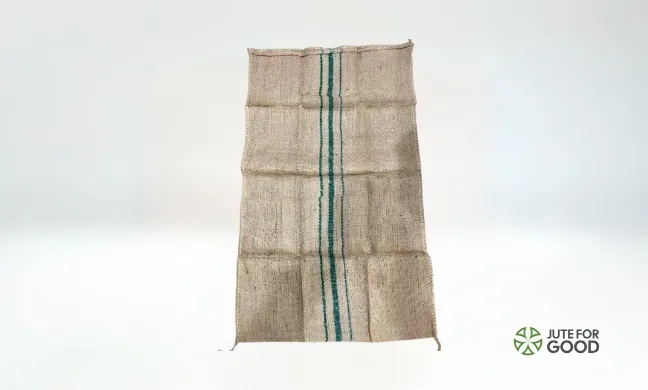
Why do importers prefer Bangladeshi jute bags
- Strong natural fibers prevent tearing during heavy loading
- Breathable material keeps grains, coffee, and cocoa fresh
- Long-lasting compared to plastic sacks
- Fully biodegradable and environmentally safe
- Customizable in printing, size, and stitch type
Importer-friendly uses:
- Agriculture: Ideal for packing maize, rice, beans, cashew nuts, peanuts, onions, potatoes, cocoa, and fertilizer
- Food grains & commodities: Popular for wheat, coffee beans, sugar, spices, and raw agricultural goods
- Coffee & cocoa industry: Perfect for transporting and storing green coffee beans and cocoa due to breathability
- Retail & wholesale: Used for eco-friendly shopping bags, promotional bags, supermarket packaging
Jute bags are available in bales and can be customized with private-label printing, color dyes, and branding based on importer requirements.
Jute Yarn
Jute yarn is produced through an industrial spinning process and is available in multiple counts single, two-ply, or multi-ply. It is used by textile mills, carpet manufacturers, weaving units, and industrial buyers worldwide.
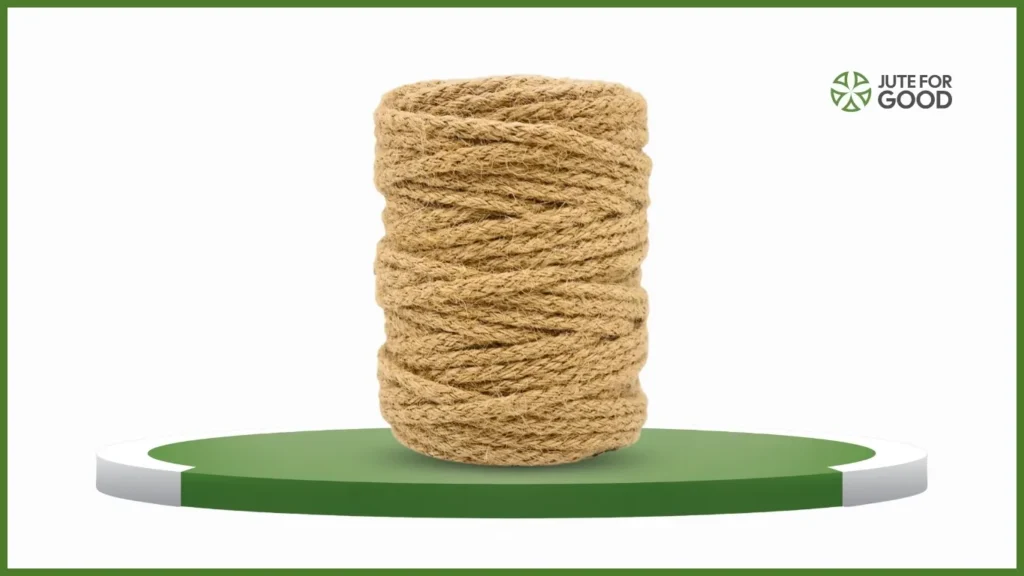
Why Bangladesh is the top source of jute yarn
- Mills offer consistent yarn count accuracy
- Fiber strength ensures excellent durability
- Cost-effective for large-volume buyers
- Suitable for both industrial and artisan use
- Can be shipped in spools, cones, or balls
Importer-friendly uses:
- Weaving: Base material for looms, rugs, mats, and woven fabrics
- Carpet manufacturing: Widely used in tufted and woven carpet production
- Sewing: Used to stitch jute sacks, geotextile rolls, and heavy-duty packaging
- Reinforcement: Common in geotextiles, construction materials, and composite products
Jute yarn is a high-demand product for industries that require durable, natural fiber inputs for manufacturing.
Jute Rope
Jute rope (twisted or braided) is valued for its strength, flexibility, and natural biodegradability. It comes in various diameters ranging from thin craft rope to heavy-duty industrial rope.
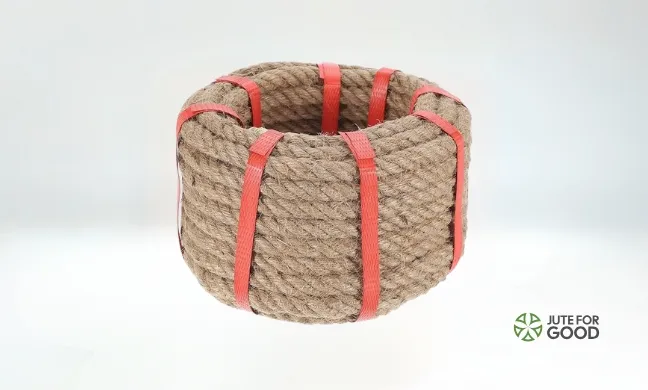
Advantages for importers
- Strong mechanical strength suitable for load-bearing
- Eco-friendly alternative to synthetic ropes
- Highly flexible and easy to handle
- No chemical smell, safe for food and agriculture use
- Multi-purpose and economical
Importer-friendly uses:
- Construction: Used at building sites for tying rods, scaffolding, lifting, and bundling
- Packaging: Suitable for tying cartons, produce sacks, and bulk goods
- Marine: Light marine applications like docking, pulling, and securing items on small boats
- Crafts & home décor: Used for macramé, decorative projects, rural crafts, and DIY interior products
Exporters typically supply ropes in coils, bundles, or bales, depending on order requirements.
Jute Fabric
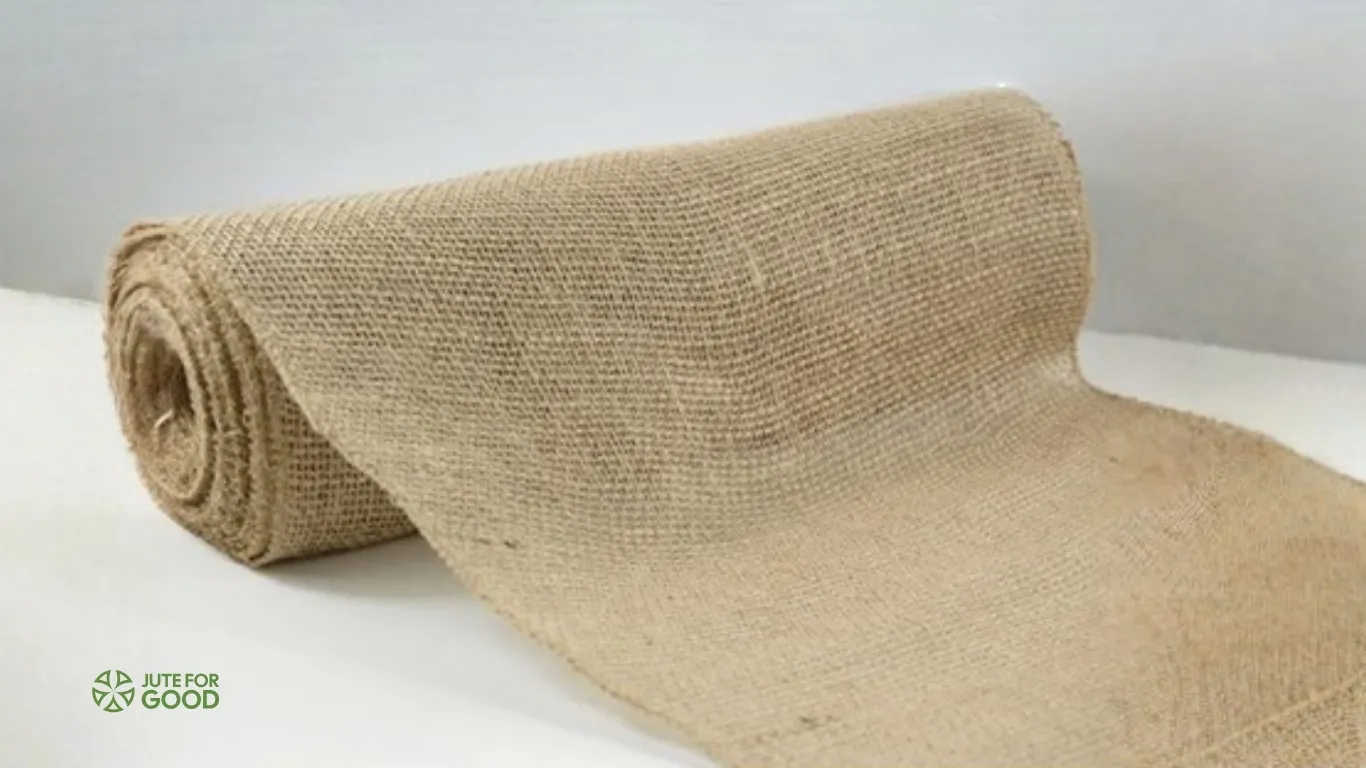
Jute fabric often called hessian, burlap or sacking cloth, is one of the most versatile jute materials used globally. Bangladesh produces millions of meters of jute fabric every year, supplying industries from agriculture to upholstery.
Why is this fabric in high demand
- Strong and durable, ideal for heavy packaging
- Natural, breathable textile suitable for food and agriculture
- Available in various weights (light, medium, heavy)
- Easy to dye, print, laminate, or custom-finish
- Affordable and environmentally sustainable
Importer-friendly uses:
- Sacks & bags manufacturing: The base fabric for jute bags, grocery bags, storage sacks
- Upholstery & furniture: Used for chairs, sofas, cushion bases, and rustic décor
- Industrial packaging: Ideal for wrapping steel coils, machinery parts, and sharp objects
- Crafts & retail: Used for decoration, table runners, packaging, event décor, and gift items
Jute fabric is typically exported in rolls or bale form, depending on the importer’s preference and shipping requirements.
Why Work Directly With a Bangladesh Manufacturer
Working directly with a Bangladesh jute factory gives importers better pricing, faster production, and more reliable quality. Bangladesh is the world’s main jute hub, and manufacturers here offer strong capacity, experience and export efficiency.
1. Direct Factory Pricing
Buying from the manufacturer removes middlemen and keeps costs low. Importers get true wholesale rates, transparent pricing, and stronger profit margins, especially for large-volume or repeat orders.
2. Faster Turnaround
Factories in Bangladesh manage the full production process, which speeds up sampling, production, and shipment. This ensures stable timelines and faster delivery, even during busy export seasons.
3. Custom Options
Manufacturers can tailor products to your exact needs, including size, weight, printing, stitching, rope diameter, and packaging. This flexibility is ideal for agriculture buyers, retail brands, and industrial clients needing custom specifications.
4. Better QC and Consistency
Direct manufacturers maintain strict quality checks at every stage. Importers get consistent fabric weight, strong stitching, accurate sizing, and clear QC updates, reducing complaints and product returns.
5. Reduced Middleman Cost
Working directly avoids agent commissions and trader markups. Importers save more, get better long-term pricing, and build a dependable supply relationship with the factory.
Jute for Good Can Be Your Trusted Supplier
Choosing a reliable supplier is essential for long-term business success. Jute for Good has built its reputation as a consistent manufacturer and exporter.
Jute for Good operates as a factory-direct supplier with more than ten years of manufacturing experience. Importers trust us for consistent quality, strong QC systems, and accurate weight and sutli count. We ship regularly to Ghana, Kenya, Nigeria, and Algeria with optimised container loading to reduce freight cost. Our facility offers custom printing, private-label options, and dedicated export support. These strengths help importers receive stable quality, competitive pricing, and smooth order management.
Top Challenges Importers Face (and How We Solve Them)
Importing jute products can be challenging when working with the wrong supplier. At Jute For Good, we address the most common problems importers face and provide reliable solutions to ensure smooth, stress-free shipments.
1. Inconsistent Quality → QC at Every Stage
Many importers struggle with bag weight differences, weak stitching, or irregular fabric finish. We solve this by maintaining strict QC at every production stage—fiber selection, weaving, stitching, printing, and final inspection—to ensure consistent, accurate quality in every shipment.
2. Delayed Shipments → Optimised Production & Faster Loading
Late delivery is a major issue in the jute industry. We avoid delays by planning production efficiently, maintaining steady raw jute stock, and ensuring faster container loading. Importers receive on-time shipments with clear ETD/ETA updates.
3. High Cost from Trading Companies → Direct Factory Access
Many buyers unknowingly pay extra when dealing with traders. We offer direct factory pricing, eliminating middleman costs and giving importers the most competitive rates for bulk orders and repeat shipments.
4. Poor Communication → Dedicated Export Team
Miscommunication causes errors in quantity, printing, packing, and documentation. Our dedicated export team provides clear updates, quick responses, and complete documentation support to ensure a smooth import experience from start to finish.
Frequently Asked Questions (FAQ)
These questions help importers understand important points before placing an order. Each answer is written in simple, direct, helpful language.
1. What is the minimum order quantity for jute bags?
Most factories follow a minimum order quantity of one ton or eighty to one hundred bales depending on the bag type. This ensures stable production and cost efficiency.
2. How long does production take after confirming the order?
Standard production takes ten to twenty-five days depending on quantity and printing requirements. Larger orders may take slightly longer but manufacturers share updates throughout the process.
3. Do I need to order samples before bulk purchase?
Yes. Samples help you check material quality, stitching strength, and weight accuracy. It also ensures the produced goods match your expectations.
4. Can I add my branding or private label?
Yes. You can request printing, logo placement, color adjustments, and custom packaging. Branding options are available for retail and wholesale buyers.
5. Which ports can you ship to in Africa?
We ship to major ports including Tema, Mombasa, Apapa, Durban, and Algiers. Transit time depends on location and shipping line availability.
6. What documents will I receive for clearance?
You will receive a commercial invoice, packing list, bill of lading, certificate of origin, and fumigation certificate. These documents are required for customs clearance.
7. How can I reduce freight cost?
Choosing FCL instead of LCL, using compressed bale packing, and optimizing container loading helps reduce freight charges by eight to ten percent.
8. Can I reorder the same specifications later?
Yes. Once your specifications are recorded, future productions follow the same standard unless you request changes.
9. What if I need urgent delivery?
Express production is possible for certain products. You should communicate your timeline early so the factory can plan accordingly.