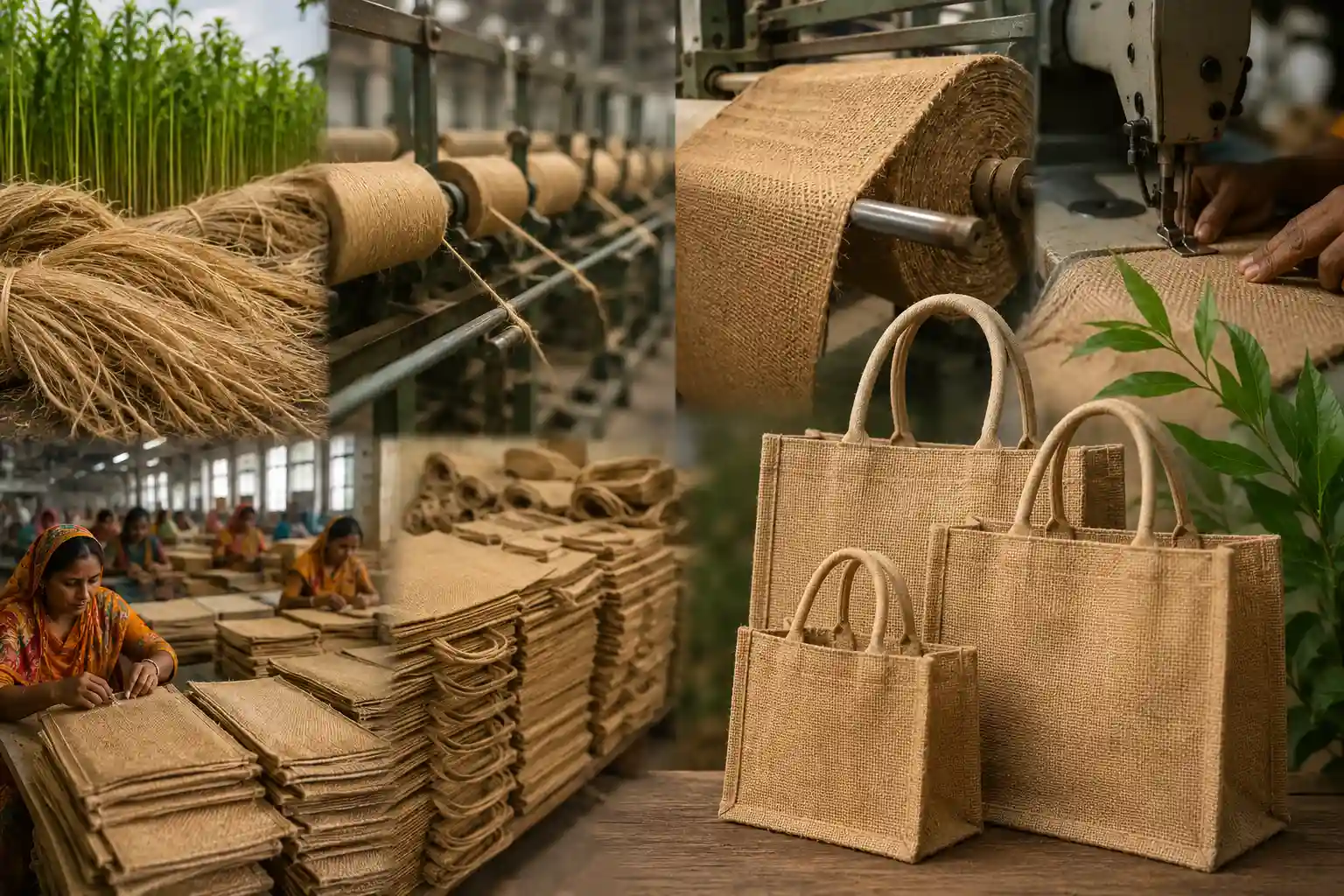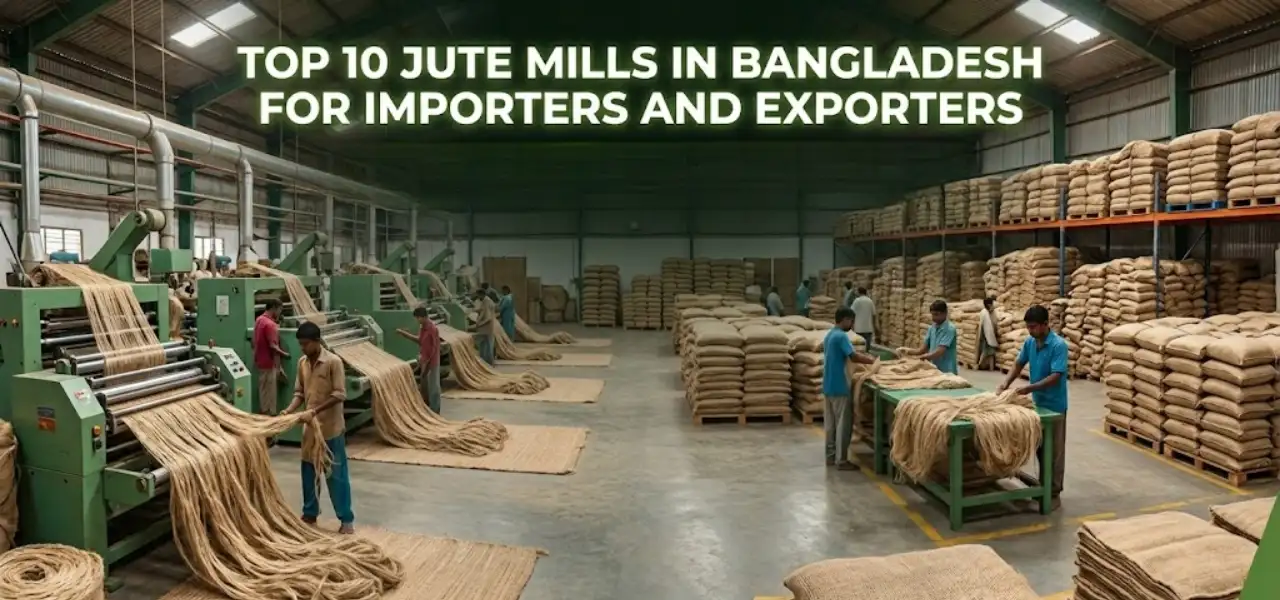

Jute bags in Ghana are used to pack cocoa, coffee, cashew, maize, groundnuts, grains, and other dry agricultural products. Ghanaian commodity exporters, packaging distributors, processors, and wholesalers can buy standard sacks locally or import specification-based bags directly from manufacturers in Bangladesh.
Ghana’s cocoa industry creates significant demand for clean and strong natural-fiber packaging. USDA Foreign Agricultural Service forecast Ghana’s 2024/2025 cocoa production at 700,000 metric tons, while COCOBOD used a more conservative target of about 650,000 metric tons.
Buyers should compare more than the price per sack. Bag dimensions, filling capacity, fabric weight, weave density, stitching, food-contact treatment, printing, bale packing, and landed cost determine whether a jute sack can perform throughout filling, storage, transport, and export handling.
This guide covers the jute bags available in Ghana, cocoa-sack requirements, product specifications, pricing factors, import procedures, and the differences between local and factory-direct sourcing.
Where Can Businesses Buy Bulk Jute Bags in Ghana?
Businesses can buy bulk jute bags in Ghana from packaging distributors, agricultural suppliers, commodity-sector vendors, and overseas manufacturers. Local suppliers suit urgent and smaller orders. Direct imports from Bangladesh are more suitable for recurring bulk requirements that need controlled specifications, custom printing, sample approval, and pre-shipment inspection.
Local sellers may hold standard sacks in Accra, Tema, Kumasi, Takoradi, and other commercial centres. Available stock can help buyers cover immediate packaging shortages without waiting for production and international freight.
Local inventory may offer limited control over:
- Finished dimensions
- Fabric GSM or completed bag weight
- Weave construction
- Stitching type
- Vegetable oil treatment
- Food-contact suitability
- Printing and regulated markings
- Bags per bale
- Inspection requirements
Factory-direct sourcing allows the importer to approve the complete product before production. Ghanaian buyers commonly receive containerized imports through Tema Port or Takoradi Port.
Which Jute Bags Can Ghanaian Businesses Buy in Bulk?
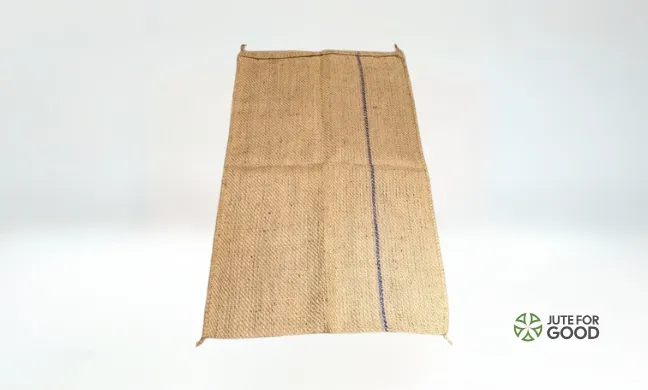
Ghanaian businesses can buy heavy jute sacks for cocoa and agricultural commodities, lighter hessian bags for packaging, and custom jute tote bags for retail use. The correct bag depends on the commodity’s bulk density, filling weight, particle size, storage conditions, handling method, and destination-buyer requirements.
| Application | Common jute product | Main buying requirements |
| Cocoa | New food-contact jute sack | 64 kg filling requirement, clean fabric, secure sewing, approved treatment, authorized markings |
| Coffee | B-Twill or hessian sack | Bean retention, breathability, low odour, buyer printing |
| Cashew | Heavy woven jute sack | Filling capacity, ventilation, seam strength, warehouse handling |
| Maize and grains | Sacking-grade jute bag | Load capacity, reinforced seams, suitable weave |
| Groundnuts | Agricultural jute sack | Product retention, dry storage performance, low contamination risk |
| Retail packaging | Custom jute tote bag | Fabric weight, handles, printing, lining, load testing |
| Industrial use | Hessian or heavy sacking bag | Abrasion resistance, filling method, closure, dimensions |
The table provides a sourcing framework rather than a universal Ghanaian standard. Buyers should confirm the final construction against the commodity, contract, filling equipment, and regulatory requirements.
64 kg Jute Cocoa Sacks
Jute cocoa sacks are woven natural-fiber bags used to store and transport dried cocoa beans. Ghanaian cocoa is commonly traded using the recognized 64 kg bag referenced by COCOBOD.
Cocoa packaging needs stricter control than general-purpose agricultural bags. Buyers should confirm:
- Empty bag weight
- Net or gross filling requirement
- Finished dimensions
- Fabric construction
- Seam type
- Vegetable oil treatment
- Food-contact suitability
- Printing ink
- Sealing method
- Authorized identification marks
The bag should be tested with actual cocoa beans before bulk production where possible.
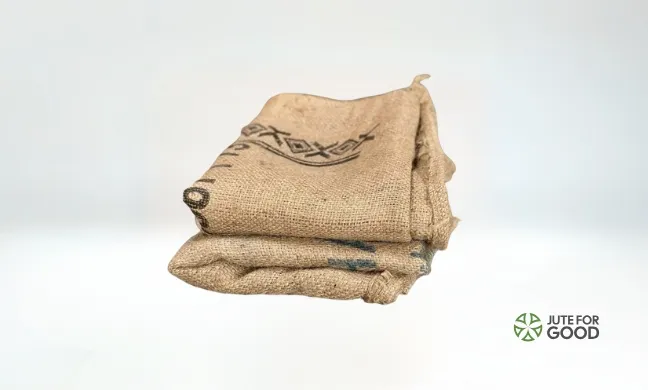
Jute Sacks for Coffee, Cashew, Maize, and Grains
Coffee, cashew, maize, groundnut, and grain buyers require different bag constructions because each commodity occupies a different volume and moves differently during filling and transport.
Coffee exporters may prioritize a tight weave that retains beans while allowing controlled airflow. Cashew and maize businesses may place more emphasis on filling volume, seam strength, warehouse stacking, and repeated handling.
A 50 kg coffee bag should not automatically use the same dimensions as a 50 kg maize sack. Buyers should determine the bag size through a filling trial rather than relying on weight alone.
Hessian Bags and Custom Jute Tote Bags
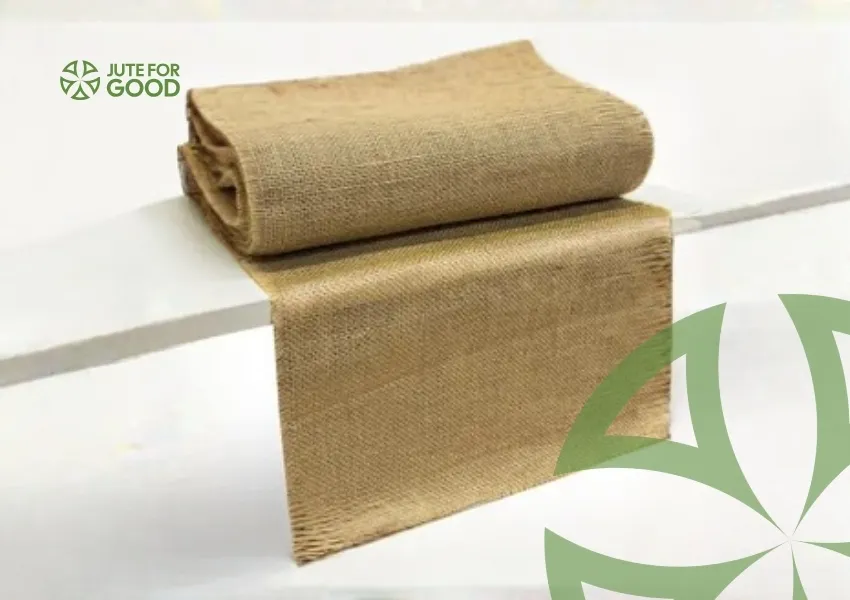
Hessian is a lighter woven jute fabric used for produce packaging, liners, wrapping, promotional bags, and retail products. The term “burlap” is also used for hessian, mainly in North American markets.
Custom jute tote bags can include:
- Cotton, jute, or rope handles
- Screen-printed logos
- Laminated or unlaminated fabric
- Cotton or nonwoven lining
- Reinforced bases
- Zippers or closures
- Buyer-specific dimensions
- Retail cartons and labeling
Retail buyers should approve a physical sample before production. The sample should confirm dimensions, fabric appearance, handle strength, stitching, printing position, and carrying performance.
What Specifications Should Buyers Check Before Ordering Jute Bags?
Buyers should check the dimensions, filling capacity, fabric weight, weave, yarn quality, stitching, treatment, moisture, printing, and bale packing before placing an order. A written specification allows suppliers to quote the same product and prevents buyers from comparing sacks with different construction or performance.
Finished Dimensions and Filling Capacity
The finished width and length should match the volume of the intended commodity. Cocoa, coffee, cashew, maize, and groundnuts have different densities and require different internal space.
A complete specification should state:
- Finished width
- Finished length
- Measurement method
- Dimensional tolerance
- Intended net or gross filling weight
- Required filled-bag shape
- Stacking or pallet requirements
The supplier should carry out a filling test where the buyer can provide the actual commodity or an equivalent material.
Fabric GSM and Completed Bag Weight
GSM measures the weight of the woven fabric per square metre. Completed bag weight measures the total weight of the finished sack after cutting, stitching, and other production processes.
A higher GSM may create a heavier fabric, but GSM alone does not prove that the sack can carry the required load. Yarn quality, weave density, seam construction, and production consistency also affect performance.
The purchase specification should define whether the buyer controls:
- Fabric GSM
- Finished bag weight
- Both measurements
- Permitted weight tolerance
Weave Density
Weave density describes the number and arrangement of warp and weft threads in the fabric. Jute mills may express the construction through porter and shots or another agreed measurement system.
A tighter weave can improve the retention of smaller products. A more open construction can provide greater ventilation. The required balance depends on the commodity and supply chain.
Buyers should avoid requesting a “strong weave” without defining the measurable construction.
Stitching and Seam Construction
Seams must remain secure during filling, lifting, stacking, transport, storage, and unloading. A suitable fabric can still fail when the sewing thread or seam construction is weak.
Common options include:
- Single stitching
- Double stitching
- Hercules stitching
- Reinforced bottom seams
- Hemmed mouths
- Selvedge mouths
- Open-mouth construction
- Jute or synthetic sewing thread
The purchase order should state the exact seam and mouth finish rather than using general wording such as “strong stitching.”
Food-Contact and Vegetable Oil Treatment
Jute sacks used for cocoa and other food products should be clean, low-odour, and suitable for their intended contact application. Buyers should confirm the batching oil, contamination controls, storage conditions, and available declarations.
Ghana Standard GS IG 2:2023 states that cocoa packaging bags should be clean, strong, suitable for food contact, properly sewn, and properly sealed. The guidance also recommends new natural-fiber bags treated with suitable vegetable oil.
A buyer should request confirmation of:
- Vegetable oil treatment
- Hydrocarbon-Free or VOT processing where required
- Oil-content control
- Odour control
- Clean storage
- Food-grade marking ink
- Treatment declarations or test reports
“Eco-friendly” does not prove that a sack is suitable for cocoa or food contact. Buyers need product-specific evidence.
Moisture Content and Storage Condition
Excess moisture can cause mould, staining, odour, fiber deterioration, or shipment rejection. The acceptable moisture level should be written into the specification and checked before container loading.
Finished sacks should be stored:
- In a dry warehouse
- Away from chemicals and fuel
- Away from strong odours
- Above damp floors
- Protected from rain
- Protected from pests
- Separated from contaminated packaging
A clean manufacturing process can be undermined by poor warehouse storage.
Printing and Identification Marks
Printing may show the product name, country of origin, grade, crop year, net weight, lot number, supplier code, buyer name, or shipping marks.
Ghana’s cocoa implementation guidance states that cocoa-bag markings may include:
- Producing country
- Product name
- Grade
- Crop year
- Shipping marks
- Verification marks
- Net weight
Regulated markings should be supplied or approved by the responsible authority or authorized buyer. A supplier should not reproduce protected or official marks without written authorization.
The buyer should approve a pre-production print sample covering artwork, positioning, colors, identification codes, and regulated marks.
Bale Packing
Bale packing affects stock counting, warehouse handling, freight utilization, and loading efficiency.
| Packing attribute | Information to confirm |
| Bags per bale | Exact unit quantity |
| Bale weight | Net and gross weight |
| Bale dimensions | Length, width, and height |
| Binding | Iron-bound or approved alternative |
| Protection | Wrapping or moisture protection |
| Identification | Product, batch, bale number, and quantity |
| Loading method | Palletized or floor-loaded |
| Container quantity | Calculated from the approved bag specification |
Buyers should confirm the bale configuration before comparing freight quotations.
What Requirements Apply to Cocoa Sacks in Ghana?
Cocoa sacks used in Ghana should be new, clean, strong, food-contact suitable, securely sewn, and correctly marked. Buyers should confirm the final bag construction, filling requirement, treatment, printing, and sealing rules with COCOBOD, the applicable Licensed Buying Company, and the destination buyer.
Standard Cocoa Bag Weight
COCOBOD currently uses the 64 kg bag as the recognized reference in Ghanaian cocoa trading and producer-price information.
The purchase specification should distinguish between:
- Empty bag weight
- Net cocoa weight
- Gross filled-bag weight
- Permitted filling tolerance
The manufacturer should not assume that all cocoa-export markets use the same weight or dimensions.
New Food-Contact Bags
Ghana’s cocoa implementation guidance requires new bags for cocoa shipments. The bags should use natural fiber, be suitable for food contact, and be free from contamination.
Used sacks may contain:
- Dust
- Chemical residue
- Moisture
- Odour
- Insects
- Damaged fibers
- Old markings
- Traces of previous contents
These risks make reused sacks unsuitable for regulated cocoa and many other food-export channels.
Sewing, Sealing, and Marking
Each cocoa bag should be properly sewn and sealed. The required markings may depend on the grade, crop year, station, lot, Licensed Buying Company, and export contract.
The buyer should provide authorized artwork before bulk printing. The supplier should produce a print sample before starting the full order.
COCOBOD and Quality Control
Ghana’s cocoa quality system includes grading, sealing, inspection, and other controls before cocoa enters the export chain. Jute bags must support this process without introducing contamination or failing during handling.
A bag does not meet the requirement only because it is made from jute. Compliance depends on:
- Fabric construction
- Cleanliness
- Treatment
- Stitching
- Printing
- Sealing
- Storage
- Inspection results
EUDR and Export Traceability
The EU Deforestation Regulation covers specified cocoa and coffee products placed on, made available on, or exported from the EU market. European operators and traders carry the core due-diligence obligations.
Ghanaian exporters may need to provide:
- Farm geolocation
- Country and production origin
- Legality information
- Supply-chain records
- Lot identification
- Buyer-requested declarations
Jute sacks do not create EUDR compliance by themselves. Bag markings, lot numbers, invoices, and packing records can support shipment identification, but they do not replace commodity-level due diligence.
Exporters should confirm the current EUDR implementation timeline and documentation requirements with their European buyers.
How Much Do Jute Bags Cost in Ghana?
Jute bag prices in Ghana depend on the product specification, order quantity, supplier location, freight, customs charges, and delivery terms. A price without dimensions, fabric weight, weave, stitching, treatment, printing, and quantity does not provide a reliable comparison.
Main Jute Bag Price Factors
| Price factor | Effect on cost |
| Bag dimensions | Larger bags require more fabric |
| GSM or bag weight | Heavier construction uses more fiber |
| Weave density | Tighter construction can increase yarn use |
| Stitching | Reinforced seams require more material and labor |
| Food-contact treatment | Controlled processing and testing may add cost |
| Printing | More colors and larger designs increase setup cost |
| Order quantity | Larger production runs may reduce unit cost |
| Bale packing | Binding, wrapping, and palletizing affect cost |
| Inspection | Third-party inspection adds a separate service charge |
| Incoterm | FOB, CFR, and CIF include different responsibilities |
| Freight | Shipping rates vary by carrier, route, and season |
| Customs clearance | Duty, tax, port, agent, and inland costs affect landed price |
Used sacks may have a lower purchase price, but they can create contamination, strength, traceability, and acceptance risks.
How Do FOB, CFR, CIF, and Landed Prices Differ?
| Quotation type | Usually includes |
| EXW | Goods at the supplier’s factory |
| FOB Bangladesh port | Goods, export packing, inland handling, and delivery on board |
| CFR Tema or Takoradi | FOB cost plus ocean freight |
| CIF Tema or Takoradi | CFR cost plus marine insurance |
| Landed Ghana cost | CIF value plus duty, taxes, port fees, clearance, and inland transport |
Two quotations should not be compared unless they use the same Incoterm and specification.
How Should Buyers Request a Price?
A complete request for quotation should include:
- Intended commodity or use
- Finished dimensions
- Filling weight
- Fabric GSM or completed bag weight
- Weave specification
- Stitching and mouth finish
- Treatment requirement
- Printing design and colors
- Total quantity
- Bags per bale
- Inspection requirement
- Destination port
- Required Incoterm
A lower price may represent a lighter bag, looser weave, simpler seam, different treatment, or lower container quantity. A written comparison table helps buyers identify these differences.
Should Buyers Purchase Jute Bags Locally or Import from Bangladesh?
Local purchasing suits urgent and smaller orders when suitable stock is already available. Factory-direct importing suits planned bulk orders requiring controlled specifications, OEM printing, approved samples, repeat consistency, and pre-shipment inspection. Buyers should compare total landed cost, lead time, working capital, and specification control.
| Buying factor | Local Ghana supply | Factory-direct Bangladesh supply |
| Delivery speed | Faster when stock is available | Requires production and shipping |
| Order quantity | Suitable for smaller purchases | Better suited to bulk procurement |
| Specification control | Limited to available inventory | Produced against buyer requirements |
| Printing | May be restricted | Custom OEM printing available |
| Sample development | Limited for stock products | Physical sample can be approved |
| Unit price | May include distributor margin | Factory-direct product pricing |
| Inspection | Local stock can be checked | In-line and pre-shipment inspection available |
| Working capital | Lower for small orders | Higher for production and import orders |
| Repeat consistency | Depends on stock source | Approved specification can be repeated |
| Customs clearance | Not required by the buyer | Required for direct imports |
A business can also use both models. Local inventory can cover urgent demand while factory-direct orders support planned stock replenishment.
How Can Businesses Import Jute Bags into Ghana?
Businesses can import jute bags into Ghana by approving the product specification and sample, agreeing on the Incoterm and payment method, completing production, inspecting the goods, preparing shipping documents, and clearing the cargo through Ghana Customs. A licensed customs agent should confirm classification, duties, and permits.
1. Prepare the Product Specification
The buyer should state:
- Bag type
- Intended commodity
- Finished size
- Filling weight
- Fabric weight
- Weave
- Stitching
- Treatment
- Printing
- Quantity
- Bale packing
- Destination port
An incomplete enquiry produces an estimated offer rather than a final quotation.
2. Review the Supplier Quotation
The quotation should identify:
- Product description
- Unit price
- Order quantity
- MOQ
- Sample terms
- Production schedule
- Bale packing
- Payment terms
- Incoterm
- Quotation validity
The buyer should confirm whether the offer is EXW, FOB, CFR, or CIF.
3. Approve a Physical Sample
The sample should be checked for:
- Finished dimensions
- Bag weight or GSM
- Weave construction
- Stitching
- Mouth finish
- Treatment
- Printing
- Filling performance
The signed or sealed sample should become the production reference.
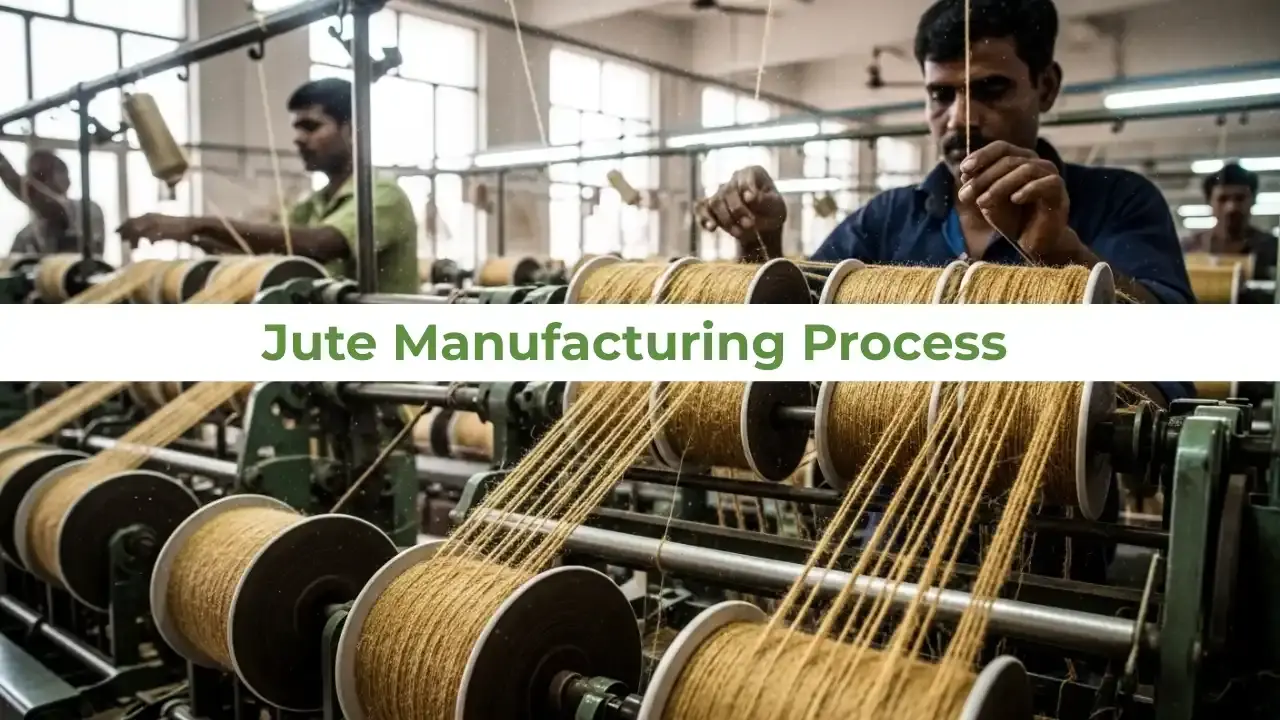
4. Complete Bulk Production
Production may include:
- Yarn selection
- Weaving
- Fabric inspection
- Cutting
- Stitching
- Treatment
- Printing
- Finished-product inspection
- Bale packing
- Container loading
The supplier should track the order against the approved sample and purchase specification.
5. Complete Inspection
Final inspection can check:
- Order quantity
- Finished dimensions
- Bag weight or GSM
- Weave
- Seams
- Printing
- Moisture
- Odour
- Bale count
- Shipping marks
- Container condition
The buyer may appoint SGS, Bureau Veritas, Intertek, or another agreed inspection company.
6. Prepare Shipping Documents
The shipment document set may include:
- Commercial or attested invoice
- Packing list
- Bill of Lading
- Certificate of Origin
- Insurance certificate where applicable
- Inspection certificate
- Treatment declaration
- Buyer-requested test report
The buyer and clearing agent should review draft documents before vessel departure.
7. Complete Ghana Customs Clearance
The Ghana Revenue Authority lists documents such as the Bill of Lading or waybill, attested invoice, packing list, Import Declaration Form, TIN or GhanaCard PIN, and relevant regulatory permits among the import-clearance requirements.
A customs agent submits the declaration through the Integrated Customs Management System. ICUMS supports classification, valuation, approval, and payment processing.
The applicable duties and taxes depend on the HS classification, customs value, product origin, and current tariff rules.
8. Collect and Inspect the Cargo
The importer should compare the delivered quantity and condition against:
- Bill of Lading
- Packing list
- Inspection report
- Bale markings
- Container seal details
- Purchase specification
Shortages, moisture damage, broken bales, or product differences should be documented before warehouse distribution.
What Are the MOQ, Lead Time, and Container Capacity for Bulk Jute Bags?
MOQ, lead time, and container capacity depend on the sack type, size, weave, treatment, printing, production setup, and bale packing. Standard unprinted sacks may have different commercial terms from custom cocoa sacks, hessian bags, or finished tote bags.
Commercial Terms at a Glance
| Commercial factor | How it is confirmed |
| MOQ | Confirmed by product type, size, printing, and production setup |
| Sample time | Confirmed after receipt of the complete specification |
| Production lead time | Issued after sample and artwork approval |
| Payment terms | Stated in the quotation or proforma invoice |
| Inspection | Buyer inspection or third-party inspection by agreement |
| Incoterm | EXW, FOB, CFR, or CIF as quoted |
| Quote validity | Stated on the formal quotation |
| Shipping schedule | Confirmed after production planning and vessel booking |
What Determines MOQ?
MOQ is affected by:
- Yarn and fabric setup
- Loom configuration
- Fabric stripes
- Printing plate preparation
- Stitching design
- Treatment process
- Bale packing
- Production efficiency
Buyers should ask whether MOQ applies per product, size, design, color, or total purchase order.
What Determines Lead Time?
The full procurement period includes:
- Specification review
- Sample development
- Sample delivery
- Buyer approval
- Raw-material planning
- Bulk production
- Inspection
- Document preparation
- Vessel booking
- Ocean transit
- Customs clearance
- Inland delivery
The supplier should issue a dated schedule after sample approval.
How Is Container Capacity Calculated?
The number of bags in a container depends on the individual bag weight, bags per bale, bale compression, total bale size, and container payload limits.
| Calculation item | Required figure |
| Weight per bag | Approved finished bag weight |
| Bags per bale | Confirmed packing quantity |
| Net bale weight | Bag weight multiplied by bags per bale |
| Gross bale weight | Includes wrapping and binding |
| Total bales | Planned container quantity |
| Total bags | Bales multiplied by bags per bale |
| Container payload | Checked against shipping-line limits |
Heavy cocoa sacks carry a lower unit count than lightweight hessian bags. Buyers should use the supplier’s specification-based loading plan rather than a general online estimate.
Why Are Jute Bags Used for Agricultural Packaging?
Jute bags suit many dry agricultural products because woven jute combines load-carrying strength with air permeability. Natural jute fiber is biodegradable and does not leave persistent plastic fragments when untreated. Final performance still depends on treatment, printing, storage, reuse, and disposal conditions.
Jute packaging can provide:
- Air movement for dry commodities
- Surface friction for stable stacking
- Resistance to warehouse handling
- Natural-fiber presentation
- Reuse where product-safety rules allow
- Biodegradability under suitable conditions
Jute is not suitable for every product. Fine powders, wet materials, contamination-sensitive goods, or products requiring a moisture barrier may need a liner, lamination, coating, or another packaging format.
Buyers should select packaging based on product protection first and sustainability claims second.
Why Import Bulk Jute Bags to Ghana from Jute For Good?
Jute For Good supplies factory-direct jute sacks, hessian products, and custom jute bags from Bangladesh. Ghanaian importers can request specification-based production, sample approval, custom printing, bale planning, and inspection before shipment.
Product Range
Jute For Good supplies:
- Cocoa sacks
- Coffee sacks
- B-Twill jute bags
- Grain and agricultural sacks
- Hessian bags
- Hessian cloth
- Sandbags
- Jute geo bags
- Custom jute tote bags
- Jute yarn
- Jute twine
- Jute rope
The product range allows importers and distributors to source related natural-fiber products through one export supply program.
Specification-Based Production
Orders can be developed against the buyer’s required:
- Dimensions
- Bag weight or GSM
- Weave
- Filling capacity
- Stitching
- Mouth finish
- Vegetable oil treatment
- Printing
- Bale configuration
- Container plan
Each order should be based on the commodity, handling conditions, and buyer requirements.
Sample Approval
A physical sample allows the buyer to check the sack before bulk production. The approved sample can become the reference for fabric, dimensions, stitching, treatment, printing, and workmanship.
Cocoa buyers should provide approved markings from the responsible authority or authorized buyer.
Quality Control and Inspection
Quality control can cover:
- Raw fiber and yarn
- Fabric weaving
- Cutting
- Stitching
- Treatment
- Printing
- Finished dimensions
- Moisture
- Bale packing
- Order quantity
- Container loading
Third-party pre-shipment inspection can be arranged by agreement.
What Should Buyers Send for a Quotation?
Ghanaian buyers should provide:
- Commodity or intended use
- Bag dimensions
- Filling weight
- GSM or finished bag weight
- Weave
- Stitching
- Food-contact treatment
- Printing artwork
- Quantity
- Bags per bale
- Destination port
- Preferred Incoterm
A complete enquiry allows Jute For Good to prepare a more accurate product, packing, and shipping quotation.
Frequently Asked Questions
What Is the Jute Sack Price in Ghana?
Jute sack prices in Ghana depend on size, bag weight, weave, stitching, treatment, printing, quantity, freight, customs charges, and delivery terms. Buyers should compare quotations using the same specification and Incoterm. Used sacks may cost less, but they may not meet cocoa, food-contact, strength, or traceability requirements.
What Is the Standard Cocoa Bag Weight in Ghana?
COCOBOD uses the 64 kg bag as the recognized reference for Ghanaian cocoa. Buyers should confirm whether the contract refers to net cocoa weight or gross filled-bag weight. Empty bag weight, dimensions, construction, and filling tolerance should also be defined before production.
Must Cocoa Beans Be Packed in New Jute Bags?
Yes. Ghana’s cocoa implementation guidance requires new bags for cocoa shipments. The sacks should be clean, strong, food-contact suitable, securely sewn, and properly sealed. Suitable vegetable oil treatment and food-grade printing ink should also be confirmed.
Can Used Jute Sacks Be Used for Cocoa Export?
Used sacks are unsuitable when the applicable cocoa standard or buyer contract requires new bags. Reused sacks may contain moisture, odour, dust, chemical residue, insects, damaged fibers, or incorrect markings that can cause rejection or contamination.
Can Cocoa Sacks Be Custom Printed?
Cocoa sacks can be printed with approved product, grade, crop-year, lot, buyer, and shipping information. Regulated or protected marks should be supplied or authorized by the responsible authority or buyer. A pre-production print sample should be approved before bulk printing.
What Documents Are Required to Import Jute Bags into Ghana?
Import clearance may require the Bill of Lading, attested invoice, packing list, Import Declaration Form, TIN or GhanaCard PIN, and applicable regulatory permits. A licensed customs agent can submit the declaration through ICUMS and confirm the current classification, duty, tax, and clearance requirements.
Can Buyers Arrange Third-Party Inspection?
Yes. Buyers can request inspection through SGS, Bureau Veritas, Intertek, or another agreed inspection company. The inspection scope may include dimensions, bag weight, weave, stitching, treatment, printing, moisture, bale count, quantity, and container loading.
How Long Does It Take to Import Jute Bags from Bangladesh?
The total period includes specification confirmation, sample approval, production, inspection, vessel booking, ocean transit, customs clearance, and inland delivery. The supplier should issue a dated production and shipping schedule after approving the specification, artwork, quantity, and payment terms.
<script type="application/ld+json">
{
  "@context": "https://schema.org",
  "@type": "FAQPage",
  "inLanguage": "en",
  "mainEntity": [
    {
      "@type": "Question",
      "name": "What Is the Jute Sack Price in Ghana?",
      "acceptedAnswer": {
        "@type": "Answer",
        "text": "Jute sack prices in Ghana depend on size, bag weight, weave, stitching, treatment, printing, quantity, freight, customs charges, and delivery terms. Buyers should compare quotations using the same specification and Incoterm. Used sacks may cost less, but they may not meet cocoa, food-contact, strength, or traceability requirements."
      }
    },
    {
      "@type": "Question",
      "name": "What Is the Standard Cocoa Bag Weight in Ghana?",
      "acceptedAnswer": {
        "@type": "Answer",
        "text": "COCOBOD uses the 64 kg bag as the recognized reference for Ghanaian cocoa. Buyers should confirm whether the contract refers to net cocoa weight or gross filled-bag weight. Empty bag weight, dimensions, construction, and filling tolerance should also be defined before production."
      }
    },
    {
      "@type": "Question",
      "name": "Must Cocoa Beans Be Packed in New Jute Bags?",
      "acceptedAnswer": {
        "@type": "Answer",
        "text": "Yes. Ghana's cocoa implementation guidance requires new bags for cocoa shipments. The sacks should be clean, strong, food-contact suitable, securely sewn, and properly sealed. Suitable vegetable oil treatment and food-grade printing ink should also be confirmed."
      }
    },
    {
      "@type": "Question",
      "name": "Can Used Jute Sacks Be Used for Cocoa Export?",
      "acceptedAnswer": {
        "@type": "Answer",
        "text": "Used sacks are unsuitable when the applicable cocoa standard or buyer contract requires new bags. Reused sacks may contain moisture, odour, dust, chemical residue, insects, damaged fibers, or incorrect markings that can cause rejection or contamination."
      }
    },
    {
      "@type": "Question",
      "name": "Can Cocoa Sacks Be Custom Printed?",
      "acceptedAnswer": {
        "@type": "Answer",
        "text": "Cocoa sacks can be printed with approved product, grade, crop-year, lot, buyer, and shipping information. Regulated or protected marks should be supplied or authorized by the responsible authority or buyer. A pre-production print sample should be approved before bulk printing."
      }
    },
    {
      "@type": "Question",
      "name": "What Documents Are Required to Import Jute Bags into Ghana?",
      "acceptedAnswer": {
        "@type": "Answer",
        "text": "Import clearance may require the Bill of Lading, attested invoice, packing list, Import Declaration Form, TIN or GhanaCard PIN, and applicable regulatory permits. A licensed customs agent can submit the declaration through ICUMS and confirm the current classification, duty, tax, and clearance requirements."
      }
    },
    {
      "@type": "Question",
      "name": "Can Buyers Arrange Third-Party Inspection?",
      "acceptedAnswer": {
        "@type": "Answer",
        "text": "Yes. Buyers can request inspection through SGS, Bureau Veritas, Intertek, or another agreed inspection company. The inspection scope may include dimensions, bag weight, weave, stitching, treatment, printing, moisture, bale count, quantity, and container loading."
      }
    },
    {
      "@type": "Question",
      "name": "How Long Does It Take to Import Jute Bags from Bangladesh?",
      "acceptedAnswer": {
        "@type": "Answer",
        "text": "The total period includes specification confirmation, sample approval, production, inspection, vessel booking, ocean transit, customs clearance, and inland delivery. The supplier should issue a dated production and shipping schedule after approving the specification, artwork, quantity, and payment terms."
      }
    }
  ]
}
</script>
Conclusion
Businesses sourcing jute bags in Ghana should compare the full product specification rather than selecting the lowest unit price. Dimensions, filling capacity, fabric weight, weave, stitching, vegetable oil treatment, food-contact suitability, printing, moisture, and bale packing affect performance and landed cost.
Cocoa buyers should confirm the recognized 64 kg requirement, use new bags, approve regulated markings, and verify the applicable COCOBOD and buyer requirements before production.
Importers should also review the quotation Incoterm, Bill of Lading, invoice, packing list, Import Declaration Form, ICUMS process, and clearance requirements with a licensed customs agent.
For a factory-direct quotation, send Jute For Good the commodity, dimensions, bag weight or GSM, stitching, treatment, printing, quantity, bale configuration, and destination port.