
Jute twine is one of the fastest-growing natural fiber products in global B2B trade. The global jute market reached USD 2.8 billion in 2024 and is projected to grow at around 5.8% CAGR through 2034, according to Global Market Insights.
Demand is increasing as importers move away from plastic-based tying, bundling, and packaging materials. With plastic bags banned or restricted in 91 countries, buyers are looking for biodegradable alternatives such as jute twine for agriculture, packaging, retail, and industrial use.
Jute For Good supplies bulk jute twine directly from Bangladesh to buyers in more than 40 countries. As a factory-direct jute twine manufacturer, supplier, and exporter, we help importers, wholesalers, agricultural buyers, packaging distributors, and retail brands source natural, customizable, and export-ready twine without middlemen.
This guide explains what jute twine is, the main types of jute twine, key specifications buyers should check, common industrial uses, how jute twine is manufactured, and how to source bulk jute twine directly from Jute For Good.
What Is Jute Twine?
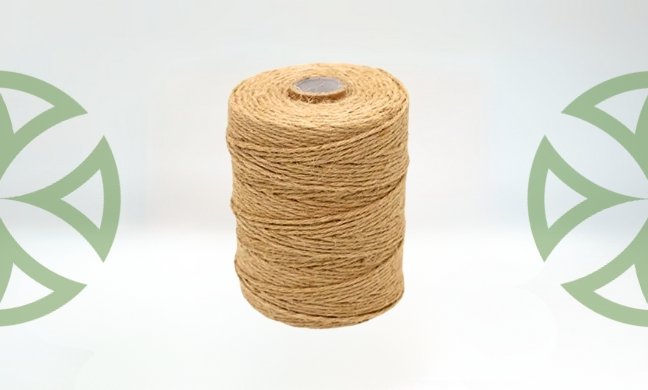
Jute twine is a strong, biodegradable cord made by twisting two or more strands of spun jute fiber together. Jute is a natural bast fiber extracted from the stem of the Corchorus plant, grown mainly in the fertile delta regions of Bangladesh and India. It is often called the golden fiber because of its natural golden-brown shine.
The twisting process gives jute twine more tensile strength than a single jute yarn. A standard 3 ply jute twine can hold significant weight compared to its diameter, making it suitable for tying, bundling, baling, and packaging work.
Unlike polypropylene twine, jute twine decomposes naturally within months when composted and leaves no microplastic residue in soil or water. It is also low-stretch, heat-resistant, and easy to knot, which are three qualities industrial buyers commonly look for.
In trade terms, jute twine belongs to the broader jute yarn and twine category, one of the largest segments of jute exports from Bangladesh. Buyers usually purchase it in bulk balls, spools, or hanks, with specifications defined by ply, count, and lashing quality.
Types, Specifications and Quality Standards of Jute Twine
Jute For Good manufactures different types of jute twine for agriculture, packaging, retail, crafts, horticulture, sack closing, and industrial bundling. The right jute twine depends on ply, count, fiber grade, finish, color, runnage, tensile strength, moisture level, oil content, packaging format, and final application.
For bulk buyers, jute twine should not be selected by name only. Importers should compare both the type of twine and the technical specification before placing an order.
The main types of jute twine we manufacture include:
- Single ply jute twine
- 2 ply jute twine
- 3 ply jute twine
- 4 ply and heavy-duty jute twine
- Natural jute twine
- Bleached jute twine
- Dyed jute twine
- Sacking twine
- Hessian twine
- Polished jute twine
- Unpolished jute twine
Jute For Good supplies these jute twine types in bulk balls, spools, hanks, and coils with custom ply, count, color, finish, runnage, ball weight, export packing, and private-label packaging for wholesale and export buyers.
1. Single Ply Jute Twine
Single ply jute twine is made from one strand of spun jute yarn. It is light, flexible, economical, and easy to knot, making it suitable for crafts, gift wrapping, tags, floristry, gardening, décor, and light bundling.
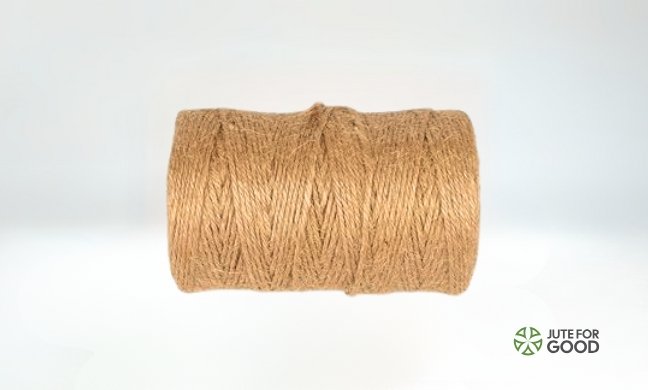
Product specification:
| Specification | Common Options |
| Ply | 1 ply |
| Count | 8 lbs to 24 lbs |
| Color | Natural, bleached, or dyed |
| Finish | Polished or unpolished |
| Packaging | Balls, spools, hanks |
| Common ball weight | 100 g to 1 kg |
| Best use | Crafts, tags, floristry, light tying |
| Customization | Count, color, finish, ball weight, label, barcode |
2. 2 Ply Jute Twine
2 ply jute twine is made by twisting two jute yarn strands together. It offers better strength than single ply twine while remaining soft and flexible, which makes it suitable for garden tying, food bundling, retail packaging, parcel tying, and light agricultural use.
Product specification:
| Specification | Common Options |
| Ply | 2 ply |
| Count | 8 lbs to 32 lbs |
| Color | Natural, bleached, or dyed |
| Finish | Polished or unpolished |
| Packaging | Balls, spools, hanks, coils |
| Common ball / spool weight | 100 g to 5 kg |
| Best use | Garden tying, food bundling, retail packaging |
| Customization | Count, runnage, color, finish, private-label packing |
3. 3 Ply Jute Twine
3 ply jute twine is one of the most widely used jute twine types for agriculture and packaging. It balances tensile strength, flexibility, knot stability, and cost, making it suitable for plant tying, parcel tying, sack closing, crop bundling, and general-purpose industrial use.
Product specification:
| Specification | Common Options |
| Ply | 3 ply |
| Count | 10 lbs to 40 lbs |
| Color | Natural, bleached, or dyed |
| Finish | Polished or unpolished |
| Packaging | Balls, spools, hanks, coils |
| Common weight | 500 g to 25 kg |
| Best use | Agriculture, sack closing, parcel tying, crop bundling |
| Customization | Count, runnage, tensile strength, finish, packing format |
4. 4 Ply and Heavy-Duty Jute Twine
4 ply and heavy-duty jute twine are made by twisting four or more jute yarn strands together. These heavier constructions provide higher strength for baling, lashing, industrial bundling, construction use, and heavy agricultural applications.
Product specification:
| Specification | Common Options |
| Ply | 4 ply and above |
| Count | 14 lbs to 48 lbs or custom |
| Color | Mostly natural; dyed options available |
| Finish | Polished or unpolished |
| Packaging | Coils, hanks, large spools |
| Common coil weight | 5 kg to 25 kg |
| Best use | Baling, lashing, construction, heavy bundling |
| Customization | Ply, count, runnage, coil weight, tensile strength |
5. Natural Jute Twine
Natural jute twine keeps the original golden-brown color of jute fiber. It is the most popular option for eco-friendly packaging, gardening, agriculture, crafts, rustic décor, and retail presentation because it gives a natural and biodegradable appearance.
Product specification:
| Specification | Common Options |
| Material | 100% natural jute fiber |
| Ply | 1 ply, 2 ply, 3 ply, 4 ply |
| Count | 8 lbs to 48 lbs |
| Color | Natural golden-brown |
| Finish | Polished or unpolished |
| Packaging | Balls, spools, hanks, coils |
| Best use | Eco packaging, gardening, agriculture, crafts |
| Customization | Ply, count, runnage, packing, private label |
6. Bleached Jute Twine
Bleached jute twine has a lighter and cleaner appearance than natural jute twine. It is suitable for premium packaging, gift wrapping, decorative products, craft lines, wedding décor, floristry, and retail display where visual presentation is important.
Product specification:
| Specification | Common Options |
| Material | 100% jute fiber |
| Ply | 1 ply to 4 ply |
| Count | 8 lbs to 40 lbs |
| Color | White, off-white, cream, or light natural |
| Finish | Polished or unpolished |
| Packaging | Balls, spools, hanks |
| Best use | Gift wrapping, décor, crafts, retail packaging |
| Customization | Shade, count, ply, finish, label, barcode |
7. Dyed Jute Twine
Dyed jute twine is produced in custom colors for brands, retailers, craft suppliers, and packaging distributors. It is used when buyers need the twine to match packaging, product labels, seasonal collections, or brand identity.
Product specification:
| Specification | Common Options |
| Material | 100% jute fiber |
| Ply | 1 ply to 4 ply |
| Count | 8 lbs to 40 lbs |
| Color | Custom dyed colors |
| Dye type | Azo-free dye options available |
| Finish | Polished or unpolished |
| Packaging | Balls, spools, hanks, retail packs |
| Best use | Branded packaging, crafts, retail, décor |
| Customization | Pantone-style shade matching, label, barcode, carton marking |
8. Sacking Twine
Sacking twine is made from coarser jute fiber and is designed for strength, economy, and utility rather than decorative appearance. It performs well in sack sewing, sack closing, rough bundling, agricultural tying, warehouse packing, and industrial applications.
Product specification:
| Specification | Common Options |
| Fiber grade | Coarser sacking-grade jute |
| Ply | 2 ply, 3 ply, 4 ply |
| Count | 12 lbs to 48 lbs |
| Color | Natural brown |
| Finish | Usually unpolished; polished available |
| Packaging | Hanks, coils, spools |
| Common weight | 1 kg to 25 kg |
| Best use | Sack closing, rough tying, industrial bundling |
| Customization | Count, ply, coil weight, runnage, export packing |
9. Hessian Twine
Hessian twine is made from finer and better-grade jute fiber. It has a smoother, cleaner, and more uniform appearance than sacking twine, which makes it suitable for visible packaging, crafts, décor, floristry, retail display, and premium presentation.
Product specification:
| Specification | Common Options |
| Fiber grade | Finer hessian-grade jute |
| Ply | 1 ply, 2 ply, 3 ply |
| Count | 8 lbs to 32 lbs |
| Color | Natural, bleached, or dyed |
| Finish | Polished or unpolished |
| Packaging | Balls, spools, hanks |
| Common ball / spool weight | 100 g to 5 kg |
| Best use | Retail packaging, crafts, décor, floristry |
| Customization | Count, color, finish, private-label retail packing |
10. Polished Jute Twine
Polished jute twine receives a light starch-based or vegetable-based surface finish. This improves smoothness, reduces fiber shedding, gives a cleaner appearance, and helps the twine run better through some tying, winding, or packaging machines.
Product specification:
| Specification | Common Options |
| Finish | Starch-based or vegetable-based polish |
| Ply | 1 ply to 4 ply |
| Count | 8 lbs to 48 lbs |
| Color | Natural, bleached, or dyed |
| Texture | Smoother, cleaner, lower-shedding |
| Packaging | Balls, spools, hanks, coils |
| Best use | Machine use, retail packaging, crafts, clean presentation |
| Customization | Polish level, count, ply, color, packaging |
11. Unpolished Jute Twine
Unpolished jute twine keeps the natural matte texture of jute fiber. It is preferred for organic farming, gardening, rustic crafts, natural packaging, compostable applications, and buyers who want minimal processing or fewer added treatments.
Product specification:
| Specification | Common Options |
| Finish | Natural, untreated, matte |
| Ply | 1 ply to 4 ply |
| Count | 8 lbs to 48 lbs |
| Color | Mostly natural; bleached or dyed options available |
| Texture | Rougher, rustic, natural feel |
| Packaging | Balls, spools, hanks, coils |
| Best use | Organic farming, gardening, rustic packaging, compostable use |
| Customization | Ply, count, runnage, ball weight, export packing |
Key Jute Twine Quality Standards Buyers Should Check
Jute twine quality depends on measurable specifications, not only appearance. Before placing a bulk order, importers should check the following technical factors:
- Count in lbs
- Ply construction
- Runnage per kg
- Lashing quality
- Tensile strength
- Moisture content
- Oil content
- Ball, spool, hank, or coil weight
- Export packing format
- Private-label packaging option
Jute For Good supplies bulk jute twine according to buyer specifications, with custom count, ply, runnage, finish, packaging, and quality documentation available for wholesale and export orders.
Count, Ply, Lashing and Runnage Explained
Four technical terms matter most when comparing bulk jute twine suppliers: count, ply, lashing, and runnage.
Count refers to yarn thickness in the jute trade. It is commonly expressed in pounds per spyndle, equal to 14,400 yards. Common jute twine counts range from 8 lbs to 48 lbs. A lower count usually means a finer twine, while a higher count means a thicker and heavier twine.
Ply means the number of jute yarn strands twisted together. For example, 3 ply 14 lbs twine means three yarn strands are twisted together at a 14 lbs count.
Runnage means the length of twine per unit of weight, usually measured in meters per kilogram. It helps buyers calculate cost per meter and compare the real usable length between suppliers.
Lashing quality describes how evenly and tightly the strands are twisted. Good lashing produces a round, uniform twine that resists unraveling, knots cleanly, and performs consistently in tying, bundling, and packaging work.
Jute For Good checks count accuracy, lashing, tensile strength, moisture content, oil content, and overall uniformity during production so buyers receive consistent twine from batch to batch.
Packaging Formats: Balls, Spools, Hanks and Coils
Jute twine packaging affects shipping cost, storage, retail presentation, and usability at the buyer’s end. Jute For Good supplies jute twine in four main packaging formats:
| Packaging Format | Common Weight | Best For |
| Balls | 100 g to 1 kg | Retail, crafts, garden centers, small packaging use |
| Spools / cops | Custom weight | Machine feeding, packaging lines, horticulture |
| Hanks | Custom weight | Agriculture and traditional market use |
| Coils | 5 kg to 25 kg | Industrial tying, bundling, and bulk users |
Bulk shipments can be packed in pressed bales, cartons, pallets, or shrink-wrapped export packs depending on buyer requirements. A standard 20 ft container usually holds around 9 to 12 metric tons of jute twine depending on packing format, while a 40 ft high-cube container can carry approximately double.
For wholesale and retail buyers, Jute For Good also provides custom private-label packaging, printed bands, barcode labels, carton marking, and export-ready documentation.
Industrial and Commercial Applications of Jute Twine
Jute twine is used across agriculture, horticulture, packaging, retail, crafts, construction, and industrial tying applications. Its strength, knot stability, biodegradability, and natural texture make it a practical alternative to synthetic twine for buyers who need eco-friendly tying, bundling, and packaging materials.
The main nine applications of jute twine include:
- Plant tying and trellising
- Vine training in vineyards
- Hay, straw, and crop bundling
- Parcel tying and sack closing
- Food bundling
- Gift wrapping and retail packaging
- Craft, décor, and floristry
- Cable filling and pipe wrapping
- Scaffolding ties and construction use
Jute For Good supplies bulk jute twine for agricultural suppliers, packaging distributors, craft wholesalers, retail brands, and industrial buyers with custom ply, count, finish, and packaging options.
Jute twine serves a wider range of industries than most buyers expect. The four segments below account for the bulk of global demand.
1. Agriculture and Horticulture
Agriculture is the largest end market for jute twine worldwide. Farms use it for plant tying, trellising tomatoes, cucumbers, and hops, vine training in vineyards, baling hay and straw, and bundling harvested crops. Because the twine biodegrades, growers can compost it with crop residue, which is why organic certification schemes in Europe increasingly favor natural twine.
Hop farms are a notable case: a single hectare of commercial hops can consume thousands of meters of twine each season, all of which returns to the soil at harvest.
2. Packaging and Bundling
Packaging is the fastest-growing application as brands replace plastic ribbon, strapping, and string. Jute twine is used for parcel tying, sack closing, food bundling such as asparagus and herbs, gift wrapping, and e-commerce packaging accents.
Distributors serving the eco-packaging market typically order natural 2 ply and 3 ply twine in retail balls alongside bulk spools for fulfillment centers.
3. Crafts, Décor, and Retail
The craft and home décor segment buys fine, uniform twine for macramé, gift tags, floristry, wedding décor, and DIY products. This market values consistent color, low shedding, and attractive retail packaging more than raw strength, which is why hessian-grade polished twine dominates here.
Retail chains and craft wholesalers usually order private-label balls with printed labels, a service Jute For Good provides in-house.
4. Construction and Cable Filling
Heavier jute twine and tarred jute marline serve niche but steady industrial uses, including cable filling, pipe wrapping, scaffolding ties, and concrete curing covers.
Tarred jute twine meets long-standing specifications in marine and electrical applications because it resists rot while remaining workable by hand.
How Jute Twine Is Manufactured
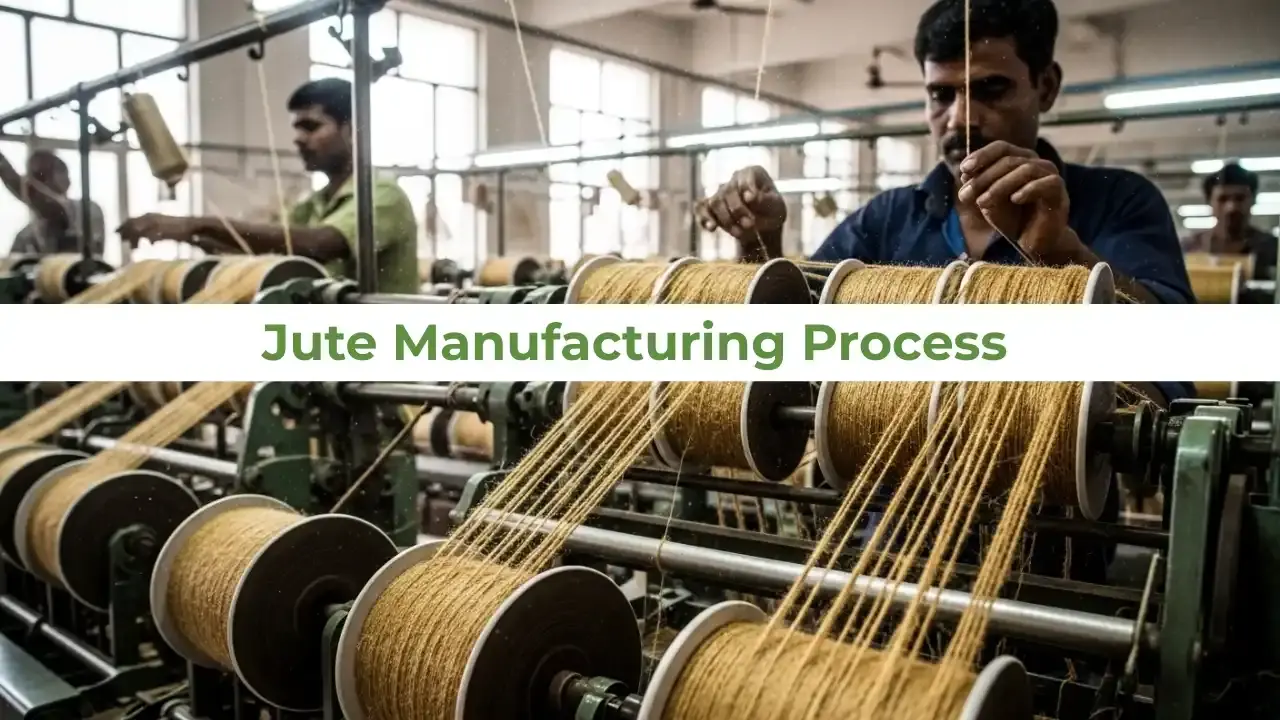
Jute twine is manufactured through a controlled process that turns raw jute fiber into strong, twisted cord for tying, bundling, packaging, agriculture, and industrial use. At Jute For Good, the manufacturing process covers fiber selection, batching, carding, drawing, spinning, twisting, optional polishing, winding, and export packing.
The main 10 steps in jute twine manufacturing are:
- Jute harvesting and retting
- Fiber stripping and drying
- Selection and batching
- Carding
- Drawing
- Spinning
- Twisting or doubling
- Optional polishing
- Winding and packing
- Final quality inspection
Understanding the production process helps buyers judge supplier quality claims. At Jute For Good, twine production follows controlled stages from raw fiber selection to export-ready packaging.
It starts in the field. Jute is harvested at 100 to 120 days, then retted in water so the fiber separates cleanly from the woody stalk. After stripping and drying, graded raw fiber arrives at the mill, where the real processing begins:
- Selection and batching: Fiber is sorted by grade, length, and color, then blended with a small amount of jute batching oil and water to soften it for spinning.
- Carding: Machines comb the fiber into a continuous ribbon called a sliver, removing short fibers and impurities.
- Drawing: Several slivers are combined and drawn out to even the thickness, usually across two or three drawing passes.
- Spinning: The sliver is spun into single jute yarn at the target count.
- Twisting or doubling: Two or more yarns are twisted together on twisting frames to form 2 ply, 3 ply, or 4 ply twine. Twist direction and turns per meter are set here, which determines lashing quality.
- Polishing, optional: Twine destined for machine use or retail receives a starch-based polish and is dried.
- Winding and packing: Finished twine is wound into balls, spools, or hanks, weighed, labeled, and packed for export.
Each batch is checked for count accuracy, tensile strength, moisture, and uniformity before it is cleared for shipment. Because Jute For Good controls every stage in-house, buyers receive consistent twine shipment after shipment, which is the single most common complaint importers raise about marketplace sourcing.
How to Order Bulk Jute Twine from Jute For Good
Ordering bulk jute twine from Jute For Good follows a simple factory-direct process: send your specification, receive a quote, approve samples, confirm production, and ship from Bangladesh with full export documentation. Buyers can customize ply, count, runnage, color, finish, packaging format, and private-label branding.
The bulk ordering process includes:
- Send inquiry with specification and quantity
- Receive quote within 24 to 48 hours
- Approve physical samples
- Confirm order and payment terms
- Start production
- Receive production and loading updates
- Ship from Chattogram with export documents
Ordering factory-direct is simpler than most first-time importers expect. The process below moves from inquiry to delivery in five clear steps.
A typical order flows like this: you send an inquiry with your target specification and quantity, we confirm specs and quote within 24 to 48 hours, we dispatch physical samples for approval, production begins after order confirmation, and goods ship from Chattogram with full export documentation. Buyers receive photo and video updates during production and loading.
Minimum Order Quantity and Customization
The standard minimum order quantity for bulk jute twine is one 20 ft container, roughly 9 to 12 metric tons depending on packing. For mixed orders, twine can be combined with jute sacks, hessian fabric, yarn, or rope in the same container, which is a practical way for distributors to test multiple product lines in one shipment. Smaller trial orders by LCL sea freight can be arranged for new buyers.
Customization options include:
- Ply, count, and runnage to your specification
- Natural, bleached, or custom-dyed shades
- Polished or unpolished finish
- Ball, spool, hank, or coil put-ups in custom weights
- Private-label packaging, printed labels, and barcoding
Shipping, Lead Times, and Incoterms
Standard production lead time is 15 to 30 days after sample approval, depending on order size and customization. Sea transit times from Chattogram are typically 25 to 35 days to European ports, 30 to 40 days to the US East Coast, and 15 to 25 days to East Asian and Middle Eastern ports.
Jute For Good quotes under all common Incoterms, most often FOB Chattogram and CIF or CFR to the destination port. Every shipment includes the commercial invoice, packing list, bill of lading, certificate of origin, and any additional documents your market requires, such as phytosanitary or fumigation certificates. Payment terms are typically an advance with balance against shipping documents, with letter of credit accepted for larger contracts.
Frequently Asked Questions About Jute Twine
What is the difference between jute twine and jute yarn?
Jute yarn is a single continuous strand spun from jute fiber, while jute twine is made by twisting two or more jute yarns together. Yarn is mainly used for weaving hessian cloth, sacking fabric, carpet backing, and rope making. Twine is a stronger finished cord used for tying, bundling, baling, and packaging.
What is the MOQ for bulk jute twine orders?
The standard MOQ for bulk jute twine at Jute For Good is one 20 ft container, which holds roughly 9 to 12 metric tons depending on the packing format. New buyers can also start with smaller LCL trial shipments or combine twine with jute sacks, hessian fabric, yarn, or rope in the same container.
Is jute twine biodegradable and food-safe?
Yes, jute twine is biodegradable and decomposes naturally in soil or compost, usually within a few months to two years depending on thickness and conditions. For food-contact applications, buyers should order hydrocarbon-free jute twine made with vegetable-oil batching, which supports IJO 98/01 compliance for coffee and cocoa packaging.
Which ply jute twine is best for agriculture?
3 ply jute twine in a medium count is usually best for agriculture because it offers a good balance of tensile strength, flexibility, and knot stability. 2 ply twine works well for delicate plant tying, while 4 ply and heavier twine is better for baling, bundling, and heavy agricultural use.
How long does shipping take from Bangladesh?
Bulk jute twine production usually takes 15 to 30 days after sample approval. Sea freight from Chattogram takes about 25 to 35 days to Europe, 30 to 40 days to the US East Coast, and 15 to 25 days to East Asia and the Middle East. Total order-to-delivery time is usually 6 to 10 weeks.
Can jute twine be customized in thickness, color, or packaging?
Yes, jute twine can be fully customized by ply, count, thickness, runnage, color, finish, and packaging format. Jute For Good supplies natural, bleached, and azo-free dyed twine in balls, spools, hanks, or coils, with private-label packaging, printed labels, and barcodes for wholesale buyers.
Conclusion
Global demand for jute twine is rising as buyers replace synthetic twine with biodegradable natural fiber. With plastic restrictions active in 91 countries and the jute sector growing at close to 6% annually, sourcing from a reliable manufacturer is more important than ever.
Jute For Good is a factory-direct jute twine manufacturer, supplier, and exporter in Bangladesh, supplying customizable, 100% biodegradable twine to buyers in more than 40 countries. We produce bulk jute twine in custom ply, count, color, finish, runnage, and packaging formats without middlemen.
Send your inquiry today and get a factory-direct jute twine quote within 48 hours.